



Application attacks are increasing rapidly, with APIs emerging as the primary target for cybercriminals. According to Akamai’s 2026 State of the Internet (SOTI) Report, API attacks surged 113% year-over-year in 2025, while web application attacks increased 73% over the same period.
87% of organizations experienced at least one API security incident in the past year, with the average cost exceeding $700,000 per incident.
Organizations now face this escalating threat landscape while also needing to comply with security regulations such as PCI-DSS, GDPR, and HIPAA. As a result, Web Application Firewalls (WAFs) have become an essential security solution.
WAF protects your web applications and APIs by monitoring and filtering HTTP traffic to block attacks like SQL injection, cross-site scripting (XSS), and other OWASP Top 10 threats. They use rules, machine learning, and threat intelligence to detect and mitigate malicious activities, ensuring legitimate traffic flows uninterrupted.
Here are the best web application firewalls that I’ve researched and reviewed based on their features, drawbacks, and pricing.
WAFs Comparisons
Here is quick glance at best WAF I’ve reviewed below.
| WAF | Deployment | Starting price | Best for |
|---|---|---|---|
| Sucuri | Cloud | $9.99/mo | Small businesses and WordPress websites |
| Cloudflare WAF | Cloud-based edge network | $20/mo | Businesses needing affordable edge security and CDN integration |
| Imperva WAF | Cloud, on-premises, hybrid | Quote-based | Large enterprises and hybrid environments |
| Fastly Next-Gen WAF | Cloud, edge, hybrid | Quote-based | Developers and high-performance applications |
| Radware Cloud WAF Service | Cloud, hybrid | Quote-based | Managed WAF and advanced DDoS protection |
| Akamai App & API Protector | Cloud-based edge network | Quote-based | Global enterprises and API-heavy applications |
| F5 WAF | Hardware, virtual, container, cloud | Quote-based | Complex and legacy environments |
| Wallarm | Cloud, Kubernetes, on-premises, hybrid | Quote-based | API-first and cloud-native organizations |
| Fortinet FortiWeb | Hardware, virtual, cloud, SaaS | Quote-based | Organizations using the Fortinet Security Fabric |
| Barracuda Application Protection | Hardware, virtual, cloud, containerized | Quote-based | Integrated WAF, bot, and DDoS protection |
| open-appsec | Kubernetes, NGINX, reverse proxy, cloud-native | open-source | DevOps teams and cloud-native deployments |
| AWS WAF | AWS-managed cloud service | Usage-based | AWS-hosted applications and APIs |
| Google Cloud Armor | Google Cloud, hybrid, multicloud | Usage-based | Google Cloud and load-balanced applications |
Sucuri
Best for Small to Medium Business Sites
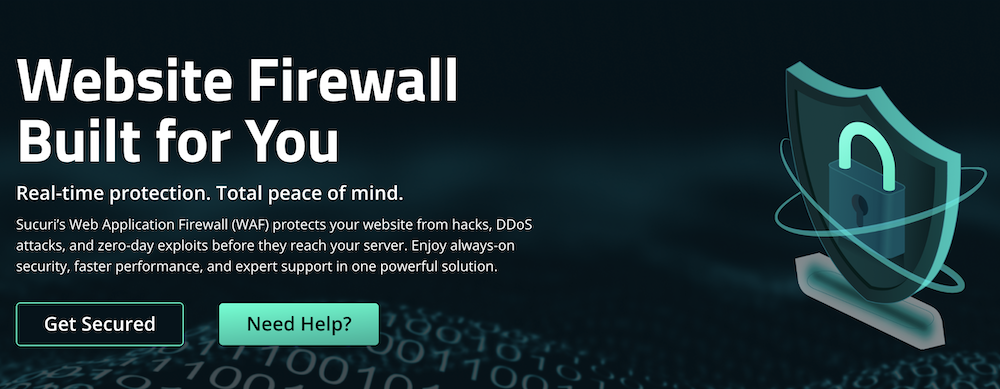
Sucuri is a good web application firewall choice for SMBs that need website protection without enterprise cost. It’s well-suited for WordPress sites, small e-commerce stores, and businesses operating with limited security budgets.
The WAF is available standalone or as part of the Sucuri Website Security Platform, which bundles firewall protection with malware scanning, removal, and monitoring. Sucuri claims its WAF can improve website speed by up to 60% through its integrated CDN.
I recommend the Website Security Platform over the standalone WAF for most users. The platform provides complete protection, including malware removal by Sucuri’s security team, advanced scans, and blocklist monitoring which are all critical for maintaining a secure online presence.
For compliance-focused organizations, the Sucuri Platform helps meet various PCI-DSS requirements by providing both WAF and intrusion detection capabilities for your website.
Sucuri WAF Features
- Cloud-based WAF with DDoS and brute force protection
- Virtual patching to block OWASP Top 10 and Layer 7 attacks
- Integrated CDN for improved performance and availability
- SSL certificate support and monitoring
Pros & Cons
PROS
CONS
Sucuri Pricing
Sucuri offers two pricing paths:
- WAF: Starting at $9.99 per month.
- Website Security Platform: $229/year (Basic), $339/year (Pro), $549/year (Business)
All Platform plans include unlimited malware removal, WAF, CDN, and daily scanning. Sucuri offers a 30-day money-back guarantee on all plans.
Cloudflare WAF
Best for Global Threat Intelligence with CDN
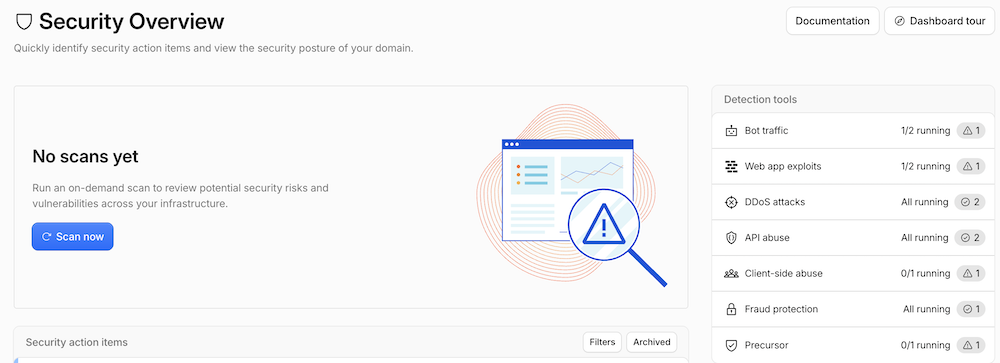
Cloudflare WAF leverages global threat intelligence and machine learning to protect your application from the latest threats, including zero-day attacks. It uses core OWASP TOP 10 rules to mitigate Layer 7 attacks, such as DDoS attacks, SQL injection attacks, cross-site scripting attacks, and more.
During my research, I noticed that the Cloudflare global network processes over 100 million HTTP requests per second at peak. This massive scale provides best-in-class threat intelligence and real-time protection updates.
Cloudflare WAF scans your content as it’s uploaded to your application to find and block malware. Its machine learning-based detection can automatically detect and block emerging threats without manual rule updates.
It can help your businesses meet certain PCI-DSS requirements, such as using a firewall or implementing the latest encryption.
Cloudflare WAF Features
- Unmetered DDoS protection across all plans
- Advanced rate limiting with custom thresholds
- Bot management and mitigation
- API security and schema validation
- Custom WAF rule creation
- GraphQL security and introspection blocking
- Sensitive data detection and blocking
Note: The availability of the above features can vary based on your subscription plan.
Pros & Cons
PROS
CONS
Cloudflare WAF Pricing
Cloudflare WAF offers multiple pricing tiers:
- Free: Basic WAF rules, DDoS protection, and CDN with limited features
- Pro: $20/month – Enhanced WAF rules, image optimization, and analytics
- Business: $200/month – Advanced WAF with custom rules, priority support
- Enterprise: Custom pricing
Most SMBs can start with the Pro plan and upgrade to Business as needed.
Imperva WAF
Best for Enterprise with Hybrid and Multi-Cloud Protection
Imperva Web Application Firewall delivers enterprise-grade web application and API protection with near-zero false positives. Named a Leader in the Forrester Wave Web Application Firewall Solutions, Imperva is suitable for organizations with global, hybrid, and multi-cloud environments that need solid WAAP (Web Application and API Protection).
Imperva’s managed rules approach sets it apart. Threat Research experts continuously create and test new rules in production environments before pushing them to customers. This proactive approach allows over 94% of Imperva customers to deploy in blocking mode from day one.
Imperva WAF protects applications across Cloud WAF (SaaS), WAF Gateway (on-premises appliances for legacy applications), and Elastic WAF (Kubernetes-native for modern cloud architectures). This flexibility makes it suitable for enterprises managing both legacy systems and modern microservices.
The platform includes integrated bot management, API security, and Attack Analytics. According to Imperva’s 2026 Bad Bot Report, bad bots now account for 40% of all internet traffic, with 27% of bot attacks targeting APIs directly.
Features
- Managed rules created and tested by Threat Research team
- Attack Analytics with ML-based alert correlation and incident narratives
- API security with schema validation and abuse prevention
- Integrated bot management and mitigation
- Terraform provider for automated deployment and Infrastructure as Code (IaC)
- Enterprise SSL management with automated certificate renewal
- Compliance support (PCI-DSS, GDPR, HIPAA, PII protection)
- Multi-cloud and hybrid deployment (Cloud WAF, WAF Gateway, Elastic WAF)
Pros & Cons
PROS
CONS
Pricing
Imperva WAF uses quote-based pricing determined by deployment model, traffic volume, and selected services.
Fastly Next-Gen WAF
Best for API-First Applications
Fastly Next-Gen WAF is built for modern development teams that need robust web application and API security without sacrificing deployment speed. Originally developed as Signal Sciences before Fastly’s $775 million acquisition in 2020, this WAF has evolved into a developer-friendly solution that integrates with DevOps workflows and API-first architectures.
I found that Fastly’s WAF stands out for its Smart Parse technology, which intelligently analyzes traffic patterns and reduces false positives through machine learning. The platform also features Network Learning Exchange, which aggregates threat intelligence across Fastly’s global customer base to identify emerging attack patterns in real-time.
Fastly Next-Gen WAF protects applications across Fastly edge and in your cloud environment or in hybrid. This flexibility makes it valuable for organizations running microservices, serverless architectures, or multi-cloud deployments.
The platform includes API security with schema validation, GraphQL introspection blocking, and protection against API abuse.
Fastly WAF Features
- Smart Parse technology for intelligent traffic analysis and reduced false positives
- Network Learning Exchange for collective threat intelligence
- API security with schema validation and GraphQL protection
- DDoS protection with automated mitigation
- Client-side protection against malicious scripts
- Real-time attack visibility and detailed security events
- DevOps-friendly API and Terraform integration
Pros & Cons
PROS
CONS
Pricing
Fastly Next-Gen WAF uses quote-based pricing determined by request volume and deployment model. Pricing typically starts around $3,000/month for up to 10 million requests per month on a 12-month commitment. Edge WAF deployments also include delivery charges based on content volume and geographic regions served.
You can contact Fastly for a quote based on your traffic patterns and security requirements. A free trial is available.
Radware Cloud WAF Service
AI/ML-Powered Automation for Faster Security Deployment
Radware Cloud WAF Service offers advanced web application and API protection. It was recently named a 2026 G2 Best Software Award winner for Web Application Firewall, reflecting its strong market position and customer satisfaction.
Built on machine learning, it combines positive and negative security models to protect against OWASP Top 10 threats, zero-day attacks, and API abuse. It is part of Radware’s Cloud Application Protection services, which bundles WAF, API protection, bot management, Layer 7 DDoS protection, and client-side protection into a single platform.
The platform protects applications across on-premises, cloud, and hybrid environments, making it suitable for large infrastructure.
I found its adaptive AI-powered web application protection quite impressive. It automatically learns application behavior and continuously fine-tunes security policies for optimal protection.
The auto policy generation and behavioral learning make it easy to maintain strong security with minimal manual tuning. I also appreciate the integrated bot management and DDoS protection, which provide a complete solution in one platform, along with clear dashboards that give great visibility into attacks and traffic patterns.
Nishan on G2 also shared my view.
I like the fact that it leverages a global network of WAF points of presence (PoPs), so you can connect to a server closer to your location for low latency.
With PCI DSS, HIPAA, and multiple ISO certifications, Radware Cloud WAF stands out for compliance and reliability.
Radware Cloud WAF Features
- Auto traffic learning to detect normal behavior and block malicious activity
- Application mapping to identify code changes and vulnerabilities
- Adaptive policies for maximum security and reduced false positives
- API protection with schema validation and abuse prevention
- Client-side protection to block malicious scripts
- Managed service with expert emergency response
- Automated analytics to simplify security management
Pros & Cons
PROS
CONS
Pricing
Radware Cloud WAF uses a subscription-based pricing model, with costs determined by service tiers and application coverage requirements. You’ll need to contact Radware for a customized quote based on your protection needs and traffic volume.
Akamai App & API Protector
Best for Enterprise-Grade WAAP
Akamai App & API Protector is a enterprise-grade Web Application and API Protection (WAAP) platform that combines web application firewall, bot mitigation, API security, and DDoS protection into a single solution.
Built on Akamai’s globally distributed edge network, one of the largest in the world with over 350,000 servers across 135 countries. It processes 178 billion WAF rule triggers daily, providing unmatched visibility into emerging attack patterns.
App & API Protector stands out for its adaptive, self-tuning security model. The platform automatically adjusts protections based on evolving threats and zero-day vulnerabilities. This eliminates the patching burden.
With API attacks increasing 113% year-over-year according to Akamai’s own 2026 SOTI report, this unified approach to web and API security is increasingly critical. App & API Protector includes dedicated API schema validation, GraphQL introspection blocking, and protection against business logic abuse.
A notable feature is the hybrid deployment option available through AWS Marketplace, which allows organizations to deploy protections at the edge while maintaining control over their origin infrastructure.
Pros & Cons
PROS
CONS
F5 WAF
Best for Enterprise Hybrid Deployments
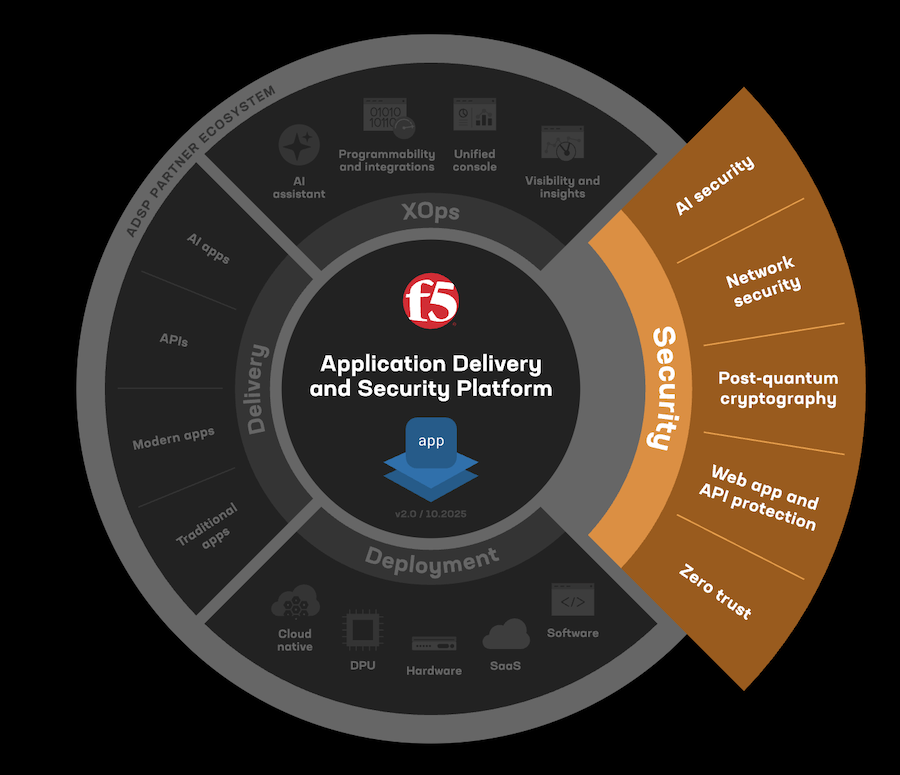
F5 offers two WAF solutions:
- BIG-IP Advanced WAF for traditional on-premises and hybrid deployments.
- Distributed Cloud WAF for modern SaaS-based protection.
Together, they provide the holistic deployment flexibility, supporting hardware, virtual appliance, container, or cloud-native SaaS.
BIG-IP Advanced WAF excels at protecting legacy monolithic applications and enterprise environments where on-premises control is essential. The platform combines signature-based threat detection with AI/ML behavioral analysis to block OWASP Top 10 risks, bots, and Layer 7 DDoS attacks.
For cloud-native architectures, Distributed Cloud WAF delivers the same enterprise-grade protection as a fully managed SaaS service. It protects applications across public clouds, private clouds, on-premises data centers, and edge locations.
Pricing
F5 WAF uses quote-based pricing by deployment model, traffic volume, and selected features.
- BIG-IP Advanced WAF (On-Premises): Custom pricing based on hardware specs, virtual appliance licensing, or perpetual license model. Available through AWS, Azure, and GCP marketplaces with PAYG or BYOL options.
- Distributed Cloud WAF (SaaS): Request-based billing model. Requests are pooled across services like WAF, API Protection, and Rate Limiting.
Wallarm
Best for Cloud-Native Applications
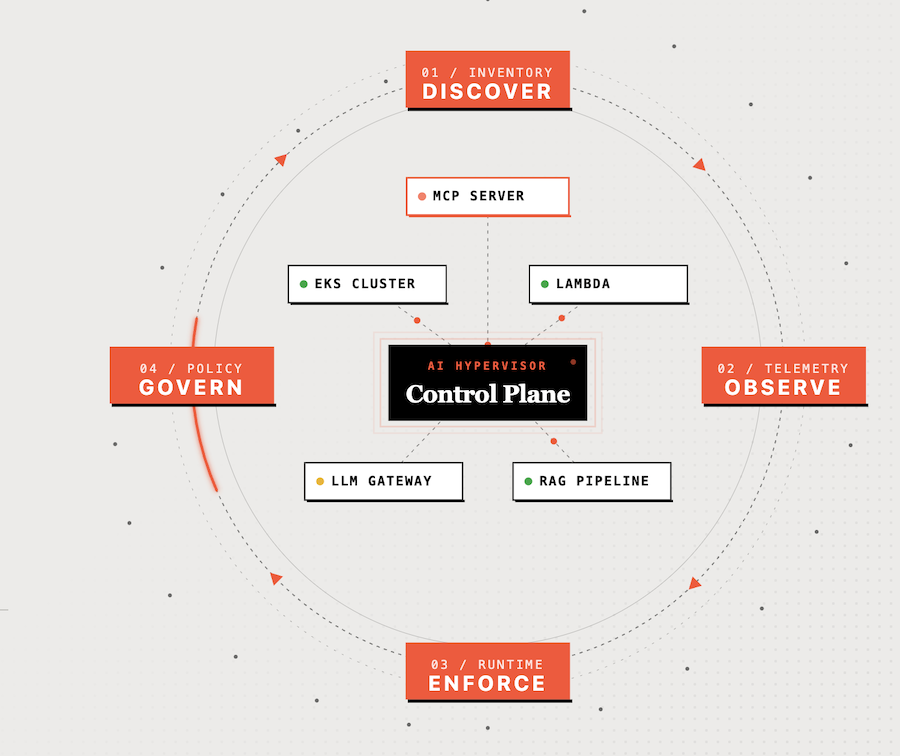
Wallarm WAF is a behavior-based web application firewall for API-first systems running cloud-native applications. Unlike legacy signature-based WAFs that require constant tuning and often run in monitor-only mode, Wallarm uses behavior-based detection to block attacks with near-zero false positives.
The WAF is part of Wallarm’s API Security Platform, which includes API discovery, API security testing, and advanced API abuse prevention.
Wallarm supports cloud (AWS, GCP, Azure), Kubernetes clusters, on-premises data centers, edge locations, or hybrid configurations. It integrates with infrastructure like NGINX, Envoy, Kong, and cloud-native load balancers.
The platform is SOC 2 Type II certified and trusted by brands including Panasonic, Victoria’s Secret, Samsung, Dropbox, and Miro. Wallarm is recognized as a G2 Momentum Leader and High Performer for WAF.
Pros & Cons
PROS
CONS
Fortinet FortiWeb
Fortinet FortiWeb is an AI-powered web application firewall. As part of Fortinet’s security ecosystem, FortiWeb provides strong protection for organizations already invested in Fortinet products like FortiGate firewalls, FortiSIEM, and FortiSOAR.
FortiWeb stands out for its machine learning-based anomaly detection and behavioral analysis capabilities. The platform uses advanced ML algorithms to establish baseline traffic patterns and automatically detect deviations that indicate attacks, reducing false positives.
A notable strength is FortiWeb’s integration with Fortinet’s Security Fabric, which enables automated threat intelligence sharing and coordinated response across the entire security stack. When FortiWeb detects an attack, it can automatically update FortiGate firewall rules, trigger FortiSOAR playbooks, and feed intelligence to FortiSIEM for correlation and analysis.
The platform is well-regarded for its price-performance ratio, making it attractive to mid-market businesses. FortiWeb consistently ranks well in independent testing, including NSS Labs and CyberDecisions evaluations.
Pros & Cons
PROS
CONS
Barracuda
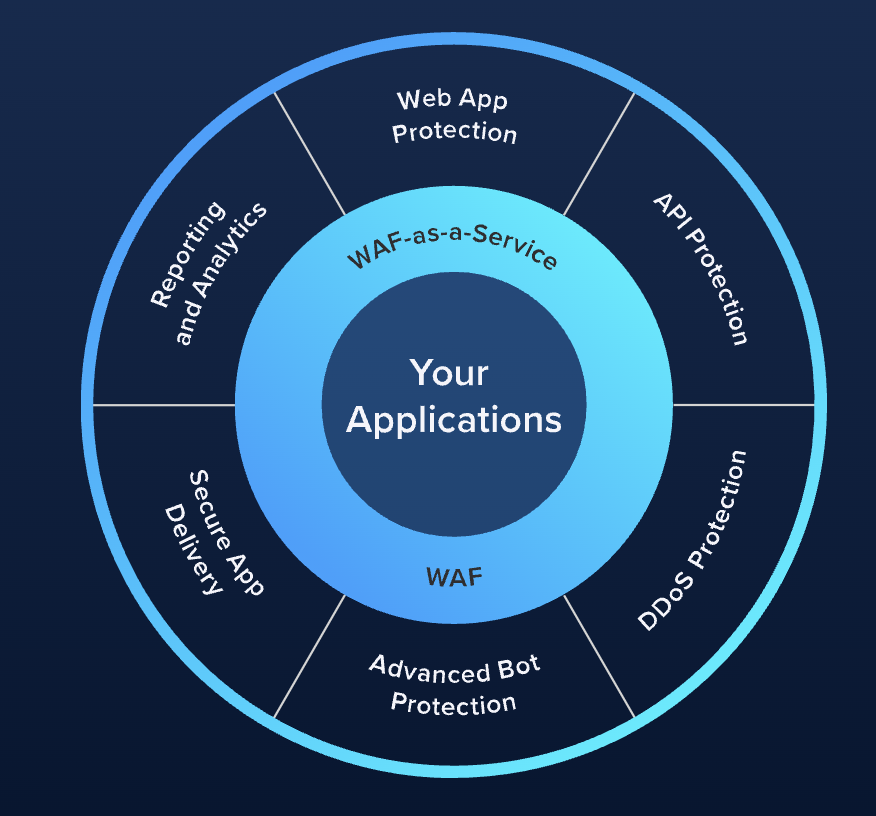
Barracuda Application Protection is an integrated platform that combines web application firewall, API security, DDoS protection, and advanced bot defense into a single solution.
Barracuda Application Protection stands out for its Advanced Bot Protection (ABP) capabilities, which use a combination of on-box detection and cloud-based machine learning/AI systems to identify and block bot attacks. This is valuable as bot traffic continues to grow, with malicious bots accounting for a significant portion of internet traffic.
The platform protects against multiple web and API attack vectors, including OWASP Top 10 threats, zero-day vulnerabilities, and business logic abuse.
A notable feature is the unlimited DDoS protection, which is included without metering or additional charges based on attack volume. This contrasts with some competitors that charge extra for DDoS mitigation or impose bandwidth limits.
open-appsec
Open-Source WAF Deployments
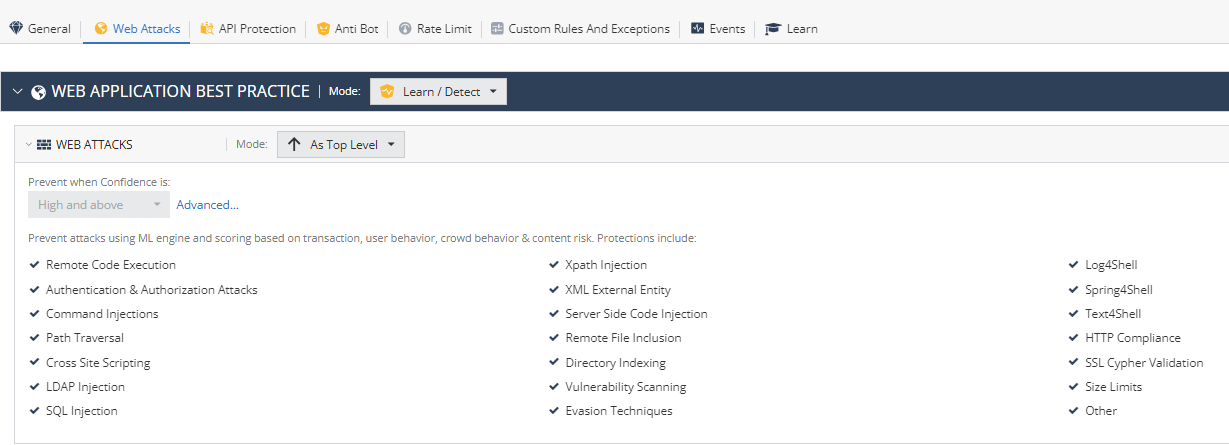
open-appsec is an open-source, machine-learning-based web application firewall originally developed by Check Point as CloudGuard AppSec. It was open-sourced in 2023 and has since become a strong option for teams looking WAF without vendor lock-in.
The project is backed by active community contributions and maintains integrations with Kubernetes Ingress, NGINX, Envoy, API gateways, and reverse proxies.
You can be deploy as an Ingress controller or sidecar proxy. The open-source model allows organizations to start with the free tier and evaluate the platform before committing to commercial support or enterprise features.
open-appsec has gained recognition in independent WAF efficacy testing, consistently ranking among top performers for detection accuracy and low false positive rates.
AWS WAF
Best for AWS-Native Applications
AWS WAF is a managed cloud web application firewall for protecting websites, APIs, and applications from common exploits, bots, and Layer 7 attacks. It integrates naturally with the AWS ecosystem, making it a practical option for businesses already using services such as Amazon CloudFront, Application Load Balancer, Amazon API Gateway, AWS AppSync, or Amazon Cognito.
You can create rules that filter requests based on IP addresses, HTTP headers, request bodies, URI paths, and other conditions. AWS also provides managed rule groups to help protect applications without requiring you to create rule manually.
A notable advantage is AWS WAF’s close connection with the wider AWS security ecosystem. Teams can manage WAF policies alongside their existing AWS infrastructure and use AWS security services to build a broader application protection strategy. However, organizations operating across multiple cloud platforms may find it less convenient than vendor-neutral WAF solutions.
Pros & Cons
PROS
CONS
Pricing
AWS’s pricing for a basic configuration with one web ACL, 19 rules, and 10 million requests costing $30 per month. Actual costs vary according to region, traffic volume, rule complexity, managed rule groups, logging, and optional features such as Bot Control or Fraud Control.
Google Cloud Armor
Best for Google Cloud, Hybrid, and Multicloud Applications
Google Cloud Armor is a managed application protection service that combines web application firewall, DDoS protection, bot management, and rate limiting. It is primarily for workloads behind Google Cloud Load Balancing, while also supporting applications deployed in hybrid and multicloud environments.
Cloud Armor includes preconfigured WAF rules based on industry standards to help protect against OWASP Top 10 risks, including SQL injection and cross-site scripting. Security teams can also create custom policies using Layer 3/7 request attributes, IP addresses, geographic locations, and other conditions.
You can deploy rule in preview mode first, and when happy, enable it for active enforcement. I would recommend if you are already using Google Cloud services. Its native reCAPTCHA Enterprise integration adds bot management and fraud-prevention capabilities.
Pros & Cons
PROS
CONS
Pricing
Google Cloud Armor is available in two service tiers: Standard and Cloud Armor Enterprise. Google Cloud does not present a flat price for all deployments. It depends on the selected tier, traffic volume, protected resources, and enabled capabilities.
Using Azure?
If you are Microsoft Azure, you can leverage Azure native WAF services.
What’s next?
After learning about the best web application firewalls (WAFs), I suggest you take as many trials and demos as possible to find the right WAF to address your security requirements.
Further read about our best managed firewalls guide.