



Staying undetected online has become a full-time battle for most users in 2026. Platforms such as Amazon, Instagram, and Google now use AI-powered fingerprinting that can identify and block datacenter proxies within seconds. One wrong proxy can cost you hours of work and thousands in lost revenue, irrespective of whether you’re scraping competitor pricing or managing multiple social accounts.
I bought a subscription for various proxies at Proxy-Seller and spent two weeks putting their network through real-world scenarios. I tested their residential proxies against Amazon’s product pages, rotated mobile IPs across Instagram accounts, and tested ISP proxies on Google searches. I measured connection speeds, tracked success rates, and documented every timeout and block.
I’ll show you the exact performance data I collected, break down their pricing plans, and tell you whether Proxy-Seller can actually keep you undetected in 2026.
What is Proxy-Seller?
Proxy-Seller is a Cyprus-based proxy provider that has been in operation for the last 10 years. It offers HTTPS and SOCKS5 proxy services and has served over 500,000 users within a decade. The service claims to offer speeds of up to 1 Gbps and proxies for 220+ countries.
Proxy-Seller has an extensive server infrastructure with over 400 networks and 800 subnets. The company ensures transparency for its customers and complies with international laws, bodies, and regulations, such as GDPR, ePrivacy Directive/Regulation, CCPA, and ISO/IEC 27001.
Based on its infrastructure and pricing model, Proxy-Seller fits several user profiles:
- Web scrapers and data agencies: The subnet diversity and country coverage work well for large-scale collection projects that need to avoid IP bans.
- Social media managers: Mobile and residential proxies with carrier selection help manage multiple accounts without triggering platform detection.
- SEO professionals and marketers: City-level targeting across 220+ countries enables accurate tracking of local search results and ad verification.
Proxy Types
Proxy-Seller offers different proxy types, each built for different use cases and detection requirements. I tested all of them to understand where each type performs best. These are the different categories:
Residential Proxies
Proxy-Seller has ethically sourced residential proxies from 220+ GEOs, enabling city- and ISP-level targeting. The platform operates 20M+ private residential proxies that support flexible rotation (per-request and time-based) and sticky sessions.
Residential proxies are ideal for user experience research, web scraping, ad analytics, and price monitoring.
ISP Proxies (Static Residential)
Proxy-Seller offers ISP proxies, a subset of residential proxies, which are known for their speed and anonymity. ISP proxies are IP addresses from actual internet service providers. Proxy-Seller has a pool of over 22 countries to choose from, and users can select ISP proxies from specific cities and/or regions (states). However, this feature isn’t available in every country/region.
The fact that ISP proxies are sourced from reputable internet providers such as Windstream, Frontier, and AT&T means users get more stable connections instead of relying on end-user devices’ features. Unlike rotating residential proxies, ISP proxies maintain the same IP address for consistent use.
ISP proxies suit users managing multiple accounts, those who want to access region-locked dashboards and SaaS applications, and those launching and QAing Ad campaigns across regions.
Mobile Proxies
Proxy-Seller allows users to buy rotating mobile proxies coming from real 4G and 5G carriers such as AT&T, Verizon, and Vodafone. However, the availability of these carriers depends on the country/location you select. These proxies are flexible: you can get a dedicated or shared pool, or even control how IPs are rotated, either on demand or by a timer.
Mobile Proxies are ideal for those managing multiple social media accounts, optimizing SEO, arbitrage traffic, and Geo-targeting.
You can also get IPv6 proxies that work only with a select group of platforms, such as Facebook, Instagram, and Google. Alternatively, you can also get a Proxy IPv4 that works with almost every website/ app, or platform.
Performance and Speed Test Results
I didn’t rely on marketing claims. However, I bought actual proxies from Proxy-Seller (one residential, one ISP, and one mobile) and ran them through systematic speed tests to see how they perform under real-world conditions.
I used Morelogin and IX browsers to configure the three proxies, each under a different profile. I tested each proxy type consecutively using Fast.com from Netflix.
Speed Test Results
My baseline connection in Nairobi, Kenya, delivered 41 Mbps download and 49 Mbps upload with 5 ms latency.
Baseline (No Proxy)
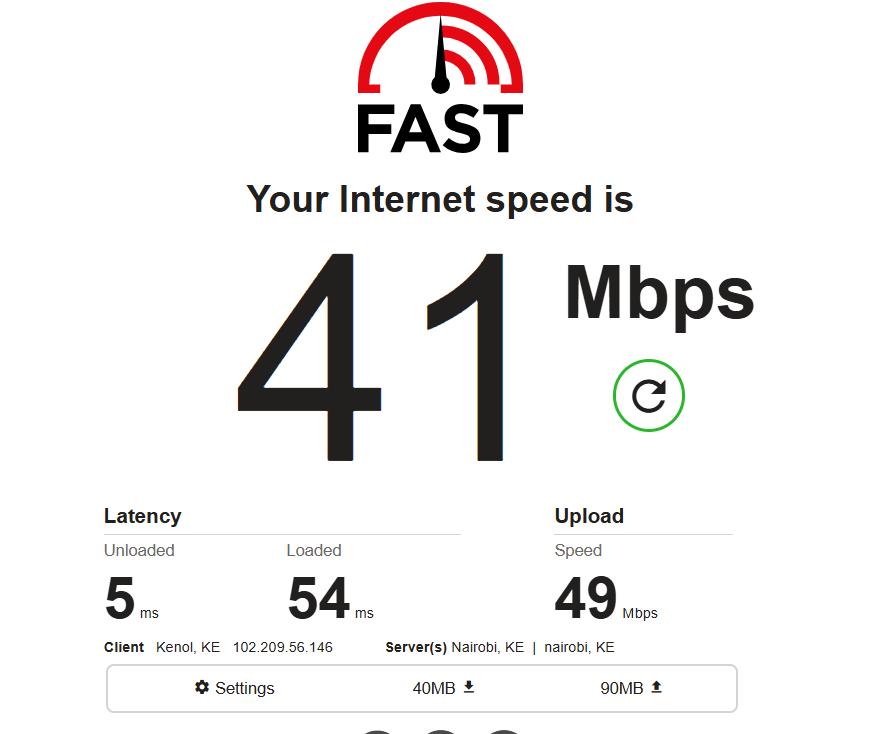
- Download: 41 Mbps
- Upload: 49 Mbps
- Latency: 5 ms (unloaded) / 54 ms (loaded)
Residential Proxy (US/Alabama – Comcast)
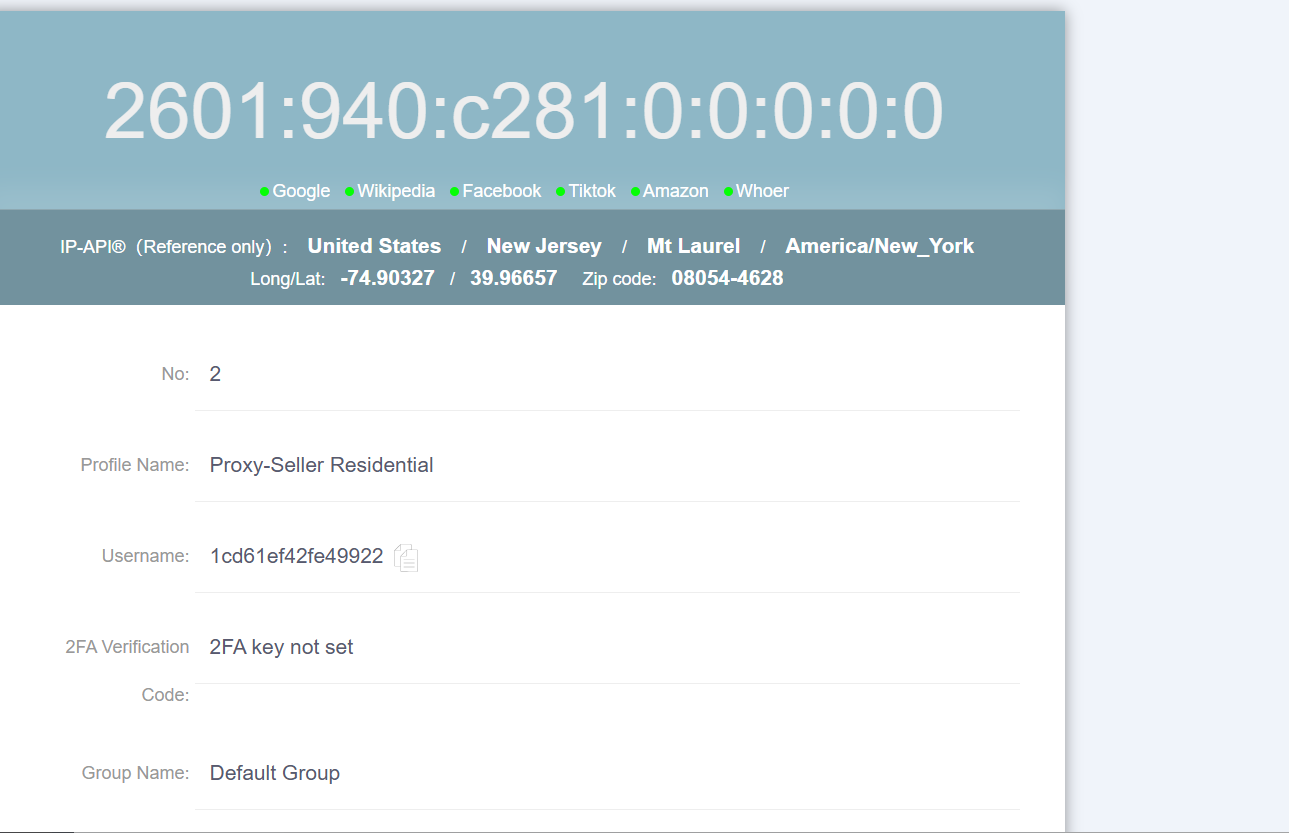
- Download: 4.7 Mbps
- Upload: 19 Mbps
- Latency: 330 ms / 431ms
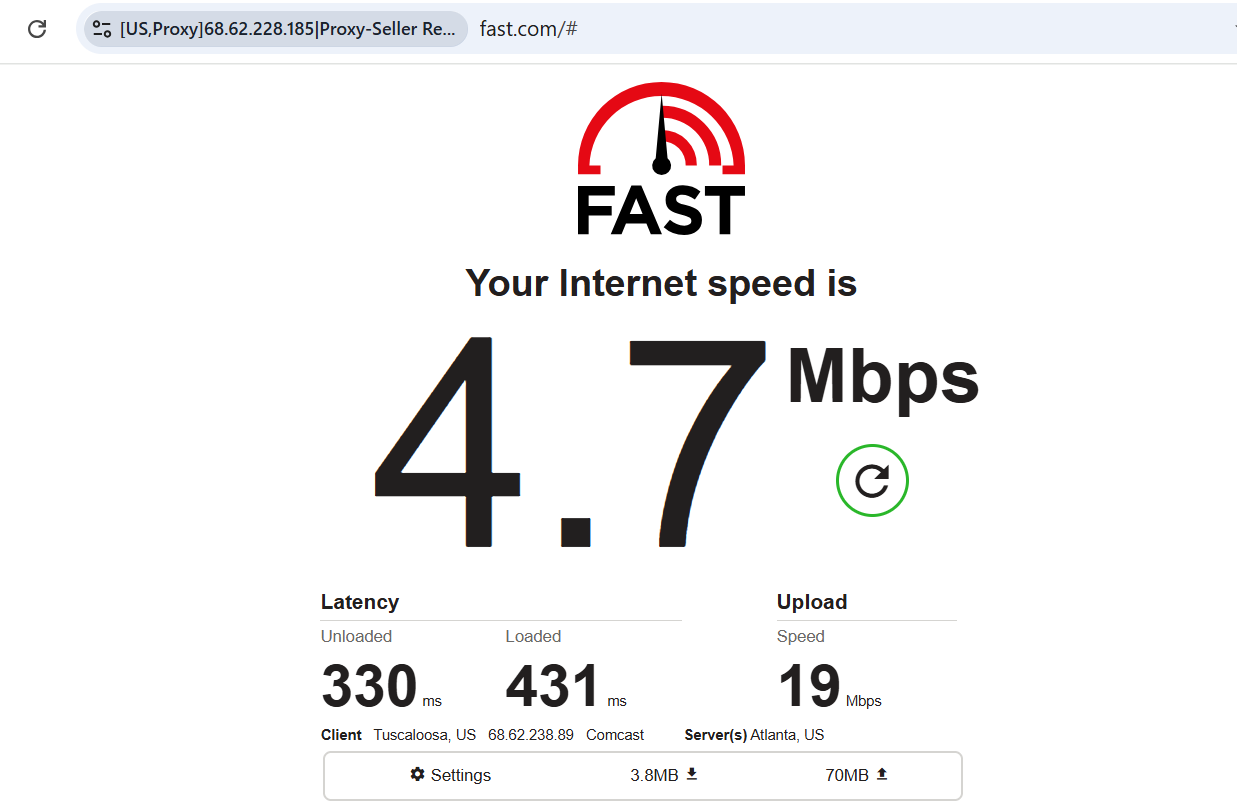
The residential proxy reduced my download speeds by 89% (from 41 Mbps to 4.7 Mbps) and upload speeds by 61% (from 49 Mbps to 19 Mbps). Latency jumped 66x from 5ms to 330ms.
This is typical for residential proxies routing traffic internationally, as you sacrifice speed for the residential IP trust score. These speeds will work for most scraping and browsing tasks, though noticeably slower than a direct connection.
ISP Proxy (UK/London)
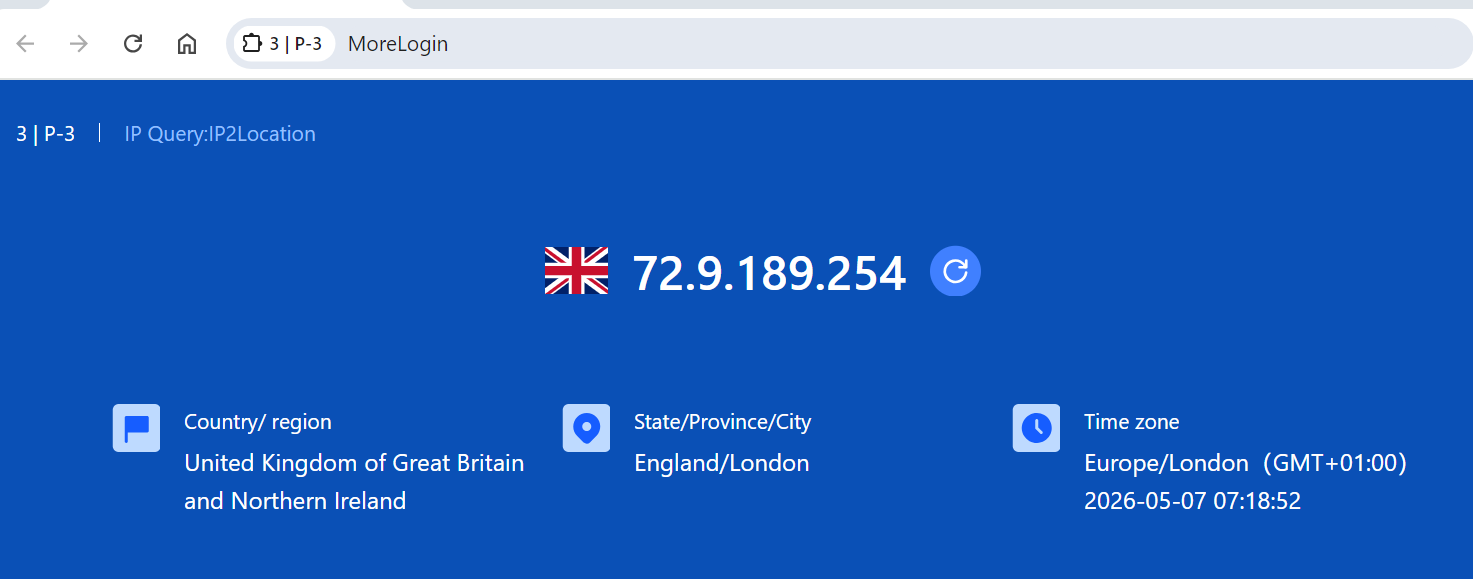
- Download: 14 Mbps
- Upload: 17 Mbps
- Latency: 264 ms / 278 ms
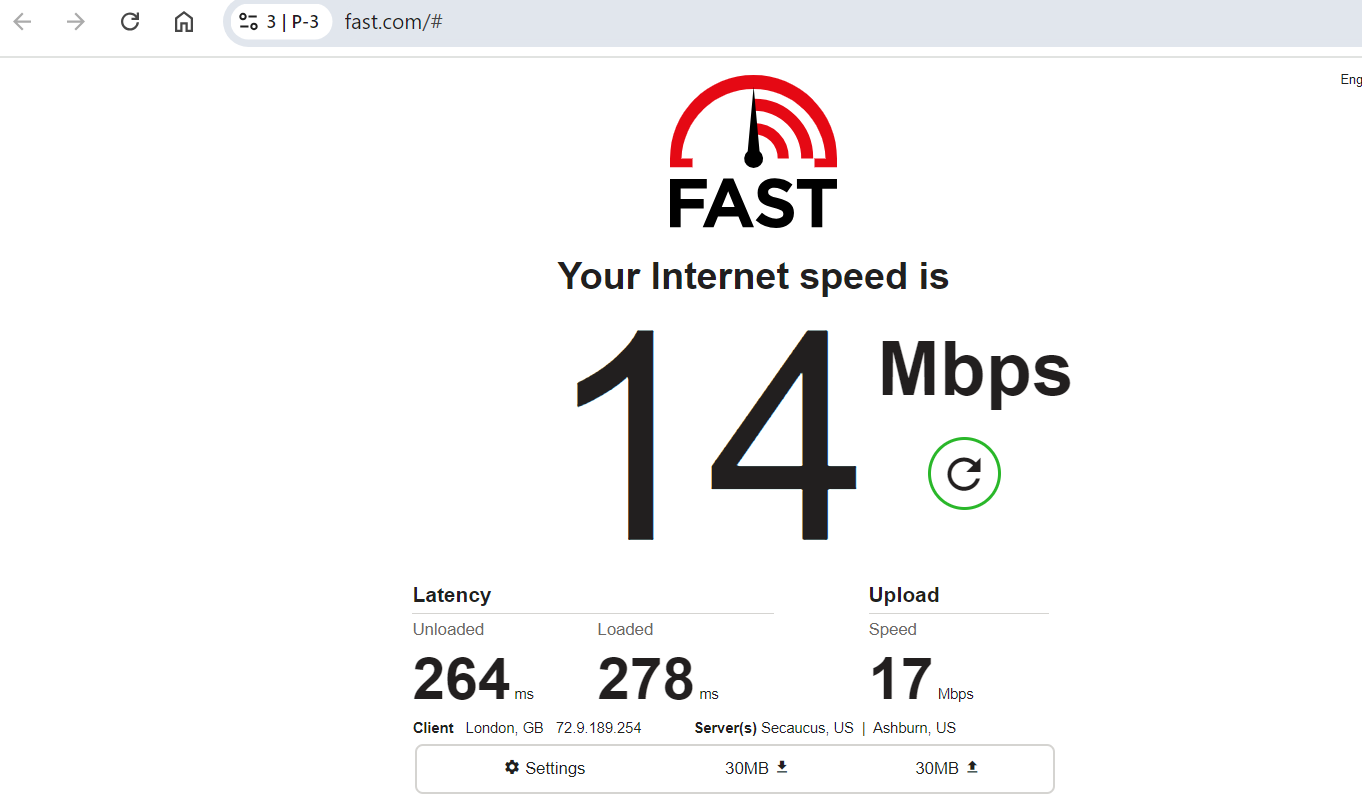
The ISP proxy delivered 14 Mbps download speed (66% slower than my baseline) and 17 Mbps upload speed (65% slower). Latency increased 53x to 264ms.
Mobile Proxy (New York City, New York)
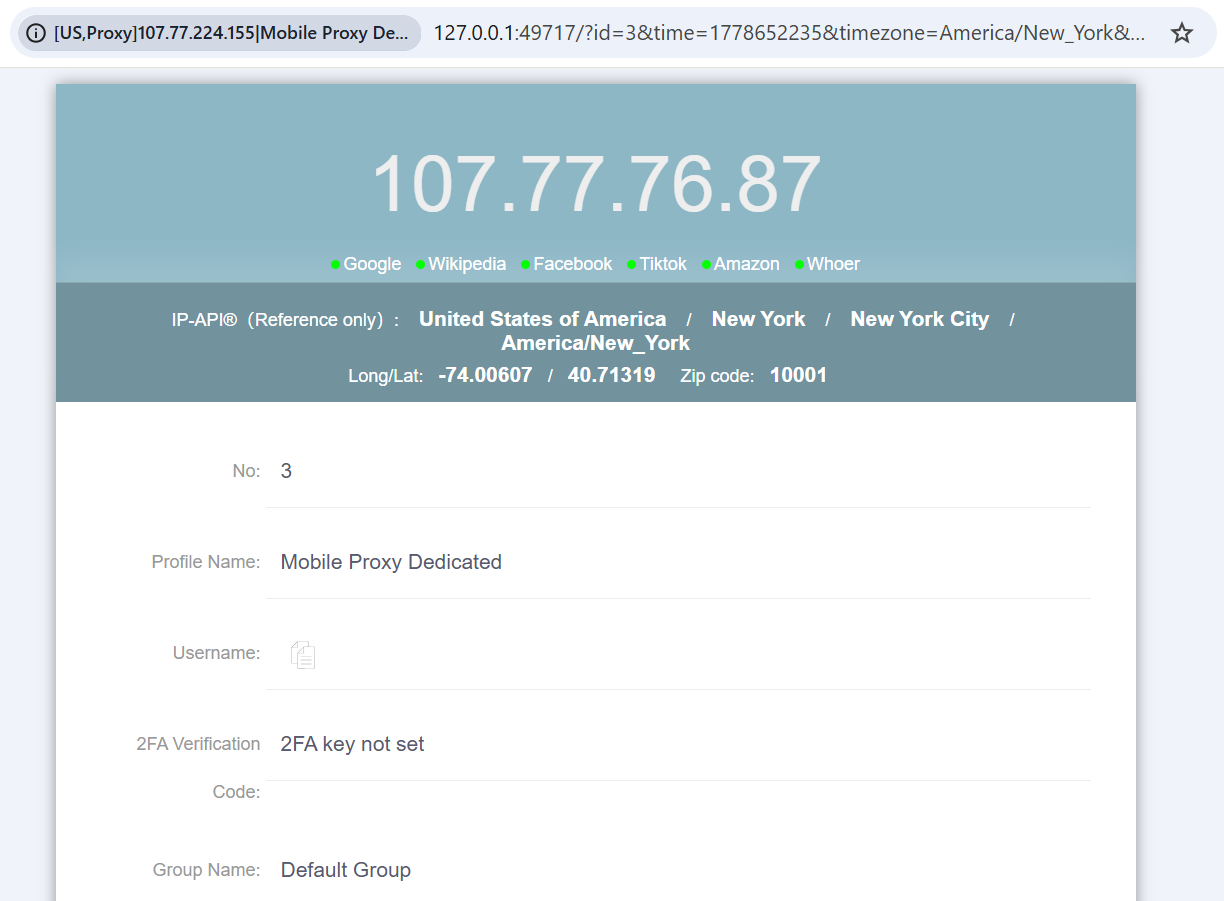
- Download: 9.7 Mbps
- Upload: 18 Mbps
- Latency: 372 ms / 540 ms
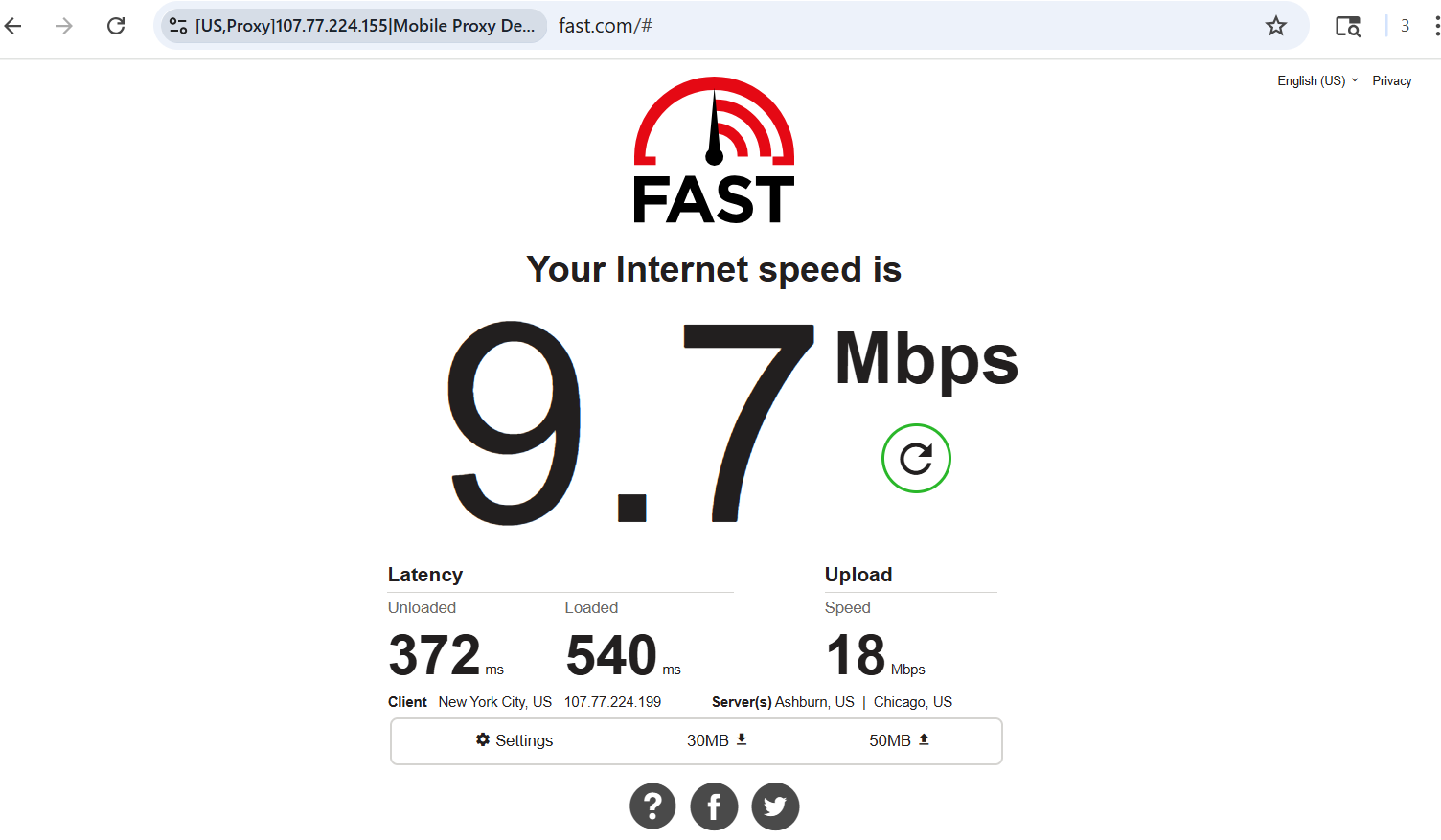
I used a dedicated mobile proxy, which clocked 17 Mbps download (76% slower) and 18 Mbps upload. The loaded latency was 540 ms loaded.
IP Quality: Spam scores and fraud checks
I then ran these proxies through various tests to determine how “clean” or “suspicious” each proxy IP appears to fraud detection systems.
I used these sites:
- https://whoer.net/: Shows anonymity score, DNS leaks
- https://scamalytics.com/: Shows fraud risk percentage
Residential Proxy (US/Alabama – Comcast)
Whoer.net Results:
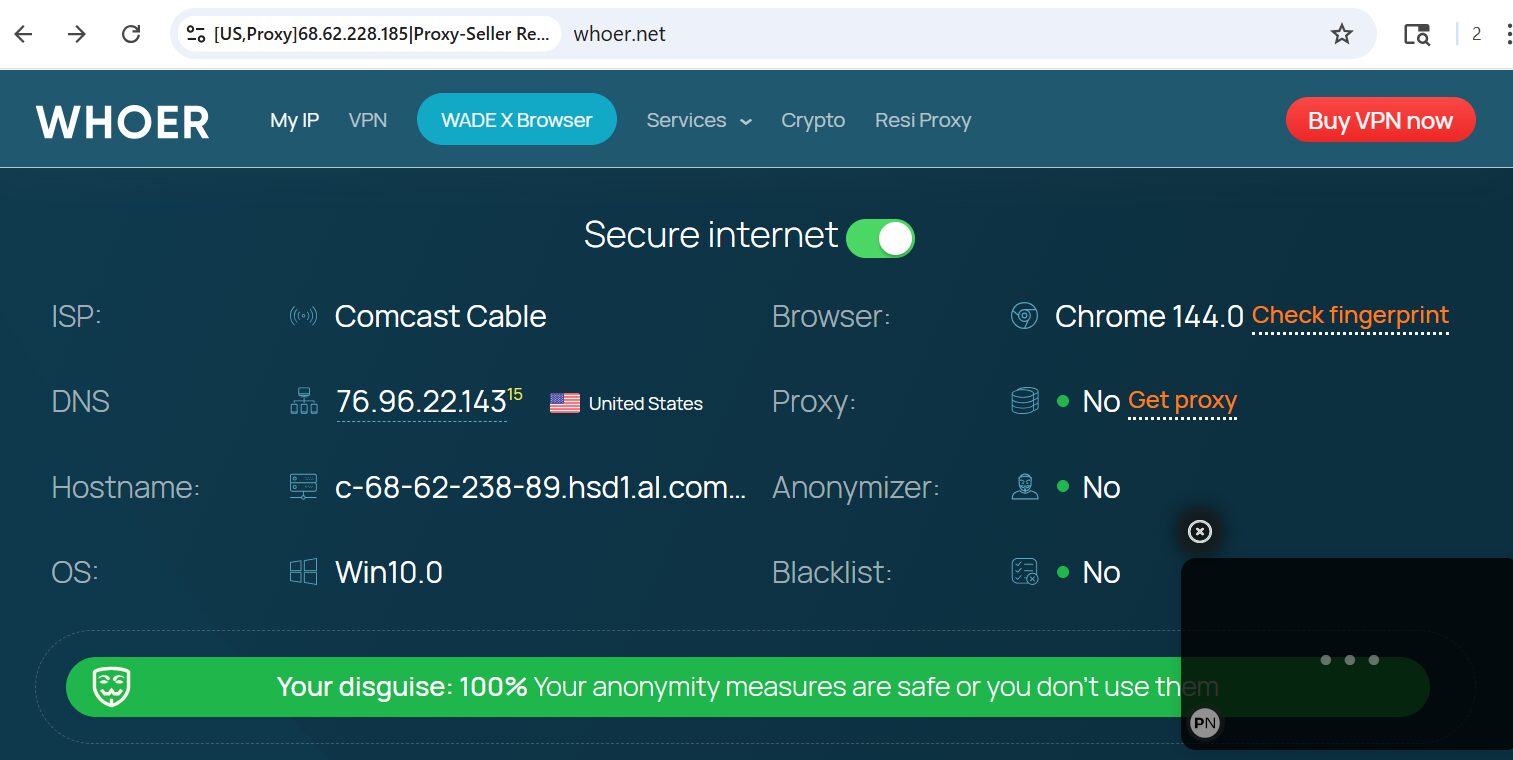
- Anonymity Score: 100%
- Proxy Detection: No
- Anonymizer Detection: No
- Blacklist Status: No
- DNS Leak: No
- ISP: Comcast Cable
The residential proxy achieved a perfect 100% anonymity score on Whoer.net. More importantly, it wasn’t detected as a proxy at all, meaning the system treats it as a legitimate Comcast residential connection. No DNS leaks, no blacklist flags, and the hostname matches a genuine residential ISP allocation.
Scamalytics Results:
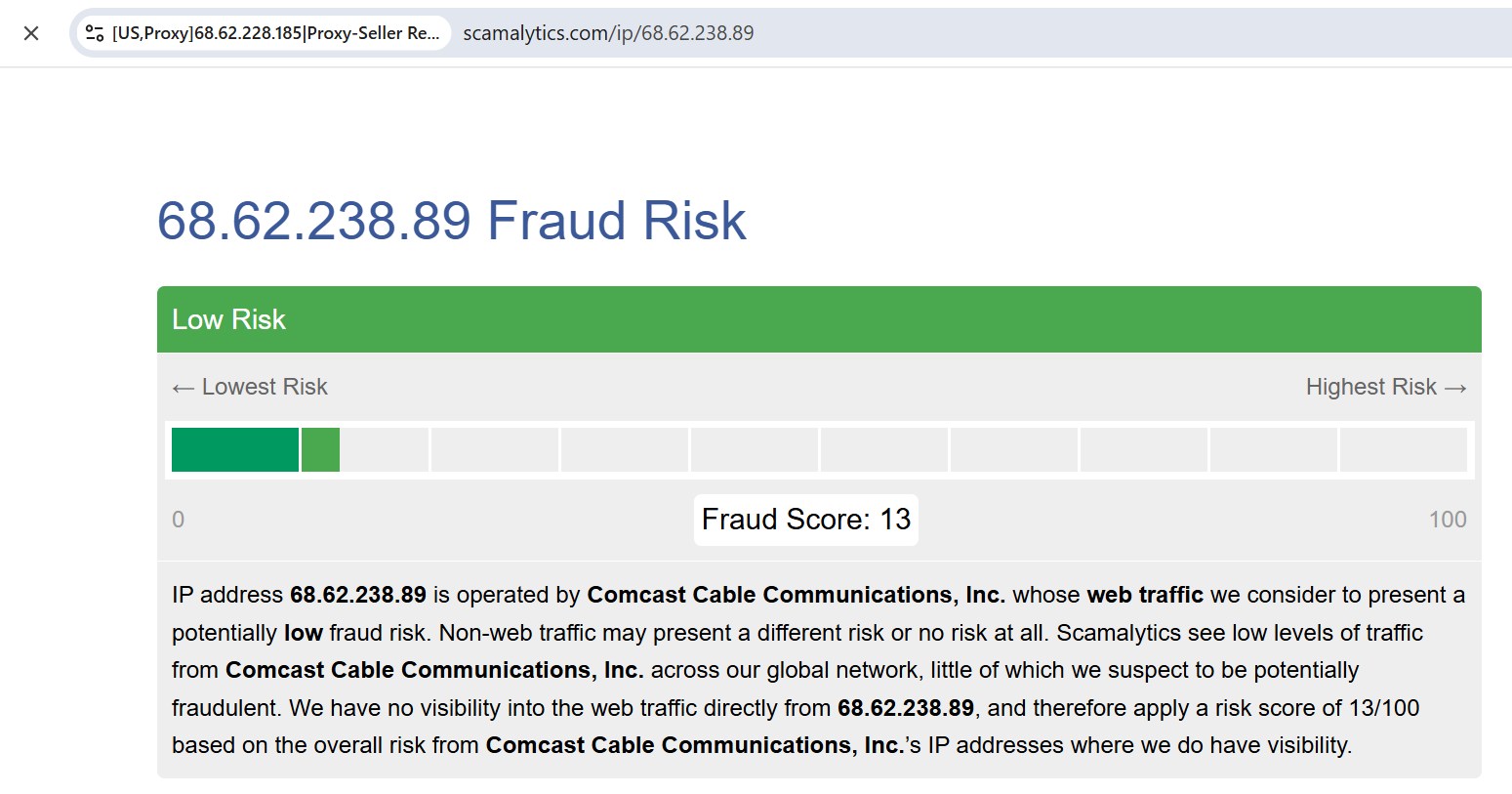
- Fraud Score: 13/100 (Low Risk)
- Risk Level: Low (green zone)
- ISP: Comcast Cable Communications, Inc.
Scamalytics gave this IP a fraud score of just 13 out of 100 (“Low Risk” category). The platform noted that Comcast’s web traffic presents “potentially low fraud risk” and they see “low levels of traffic from Comcast Cable Communications, Inc. across our global network, little of which we suspect to be potentially fraudulent.”
This means it’s a clean residential IP. Thus, it will work perfectly for operations where you need to avoid fraud-detection systems, such as social media management, account creation, and ad verification.
ISP Proxy (UK/London – NTT America/TELUS)
Whoer.net Results:
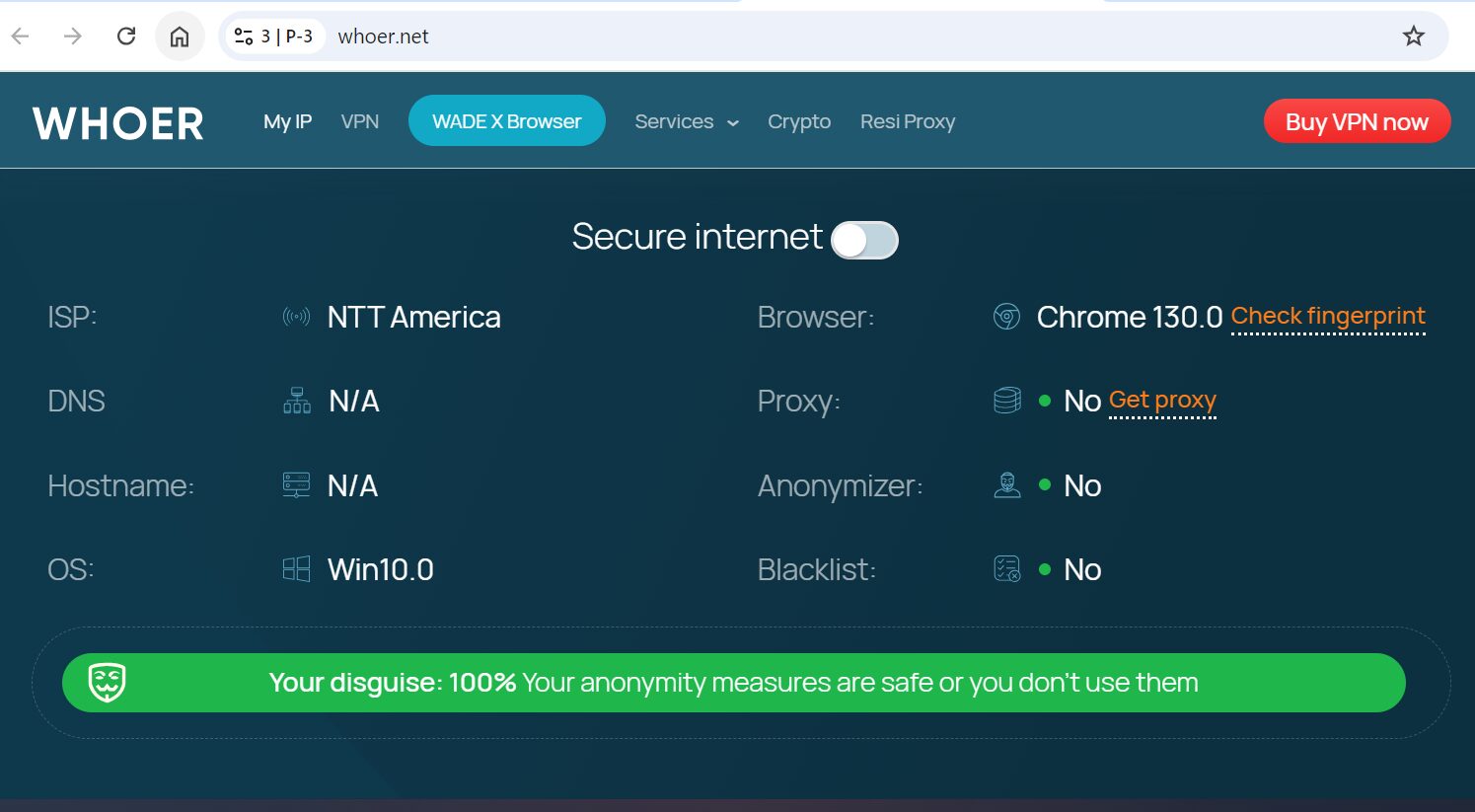
- Anonymity Score: 100%
- Proxy Detection: No
- Anonymizer Detection: No
- Blacklist Status: No
- ISP: NTT America
The ISP proxy had 100% anonymity score on Whoer.net and wasn’t flagged as a proxy. The system identified it as originating from NTT America with no DNS leaks or blacklist warnings.
Scamalytics Results:
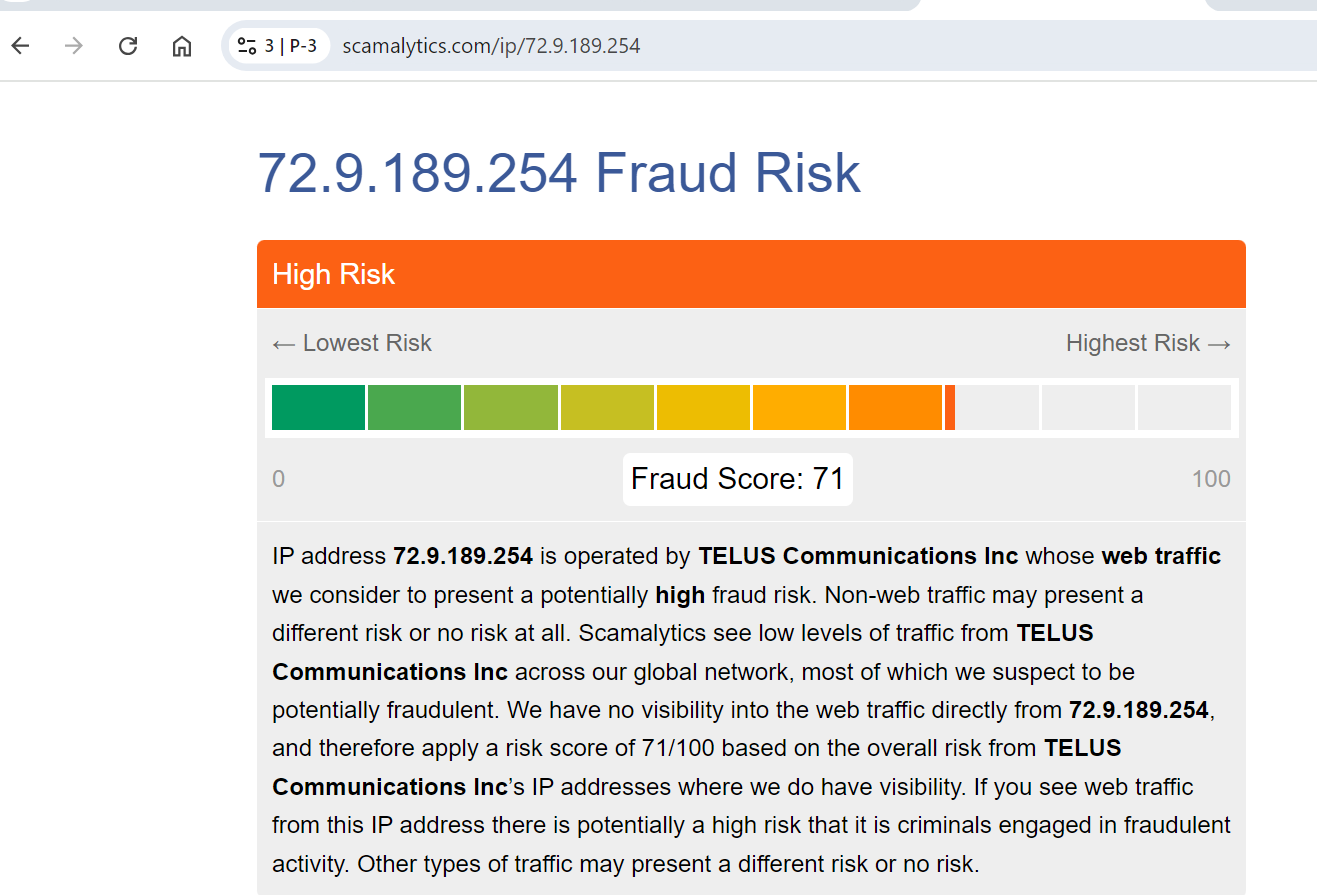
- Fraud Score: 71/100 (High Risk)
- Risk Level: High (orange zone)
- ISP: TELUS Communications Inc
Scamalytics showed a fraud score of 71 out of 100 (“High Risk” category). The platform noted that TELUS Communications Inc’s “web traffic we consider to present a potentially high fraud risk” and that they “see low levels of traffic from TELUS Communications Inc across our global network, most of which we suspect to be potentially fraudulent.”
Even though this ISP passes basic anonymity checks and isn’t detected as a proxy, sophisticated fraud detection systems flag its IP ranges as suspicious.
Thus, if you’re scraping public data or running e-commerce bots on sites that use basic IP reputation checks, this ISP proxy will work well. But if you’re dealing with platforms that employ advanced fraud scoring, such as banking sites, high-value e-commerce, or payment processors, that 71/100 score will likely trigger additional verification steps.
Mobile Proxy (New York-AT&T Wireless)
Whoer.net Results:
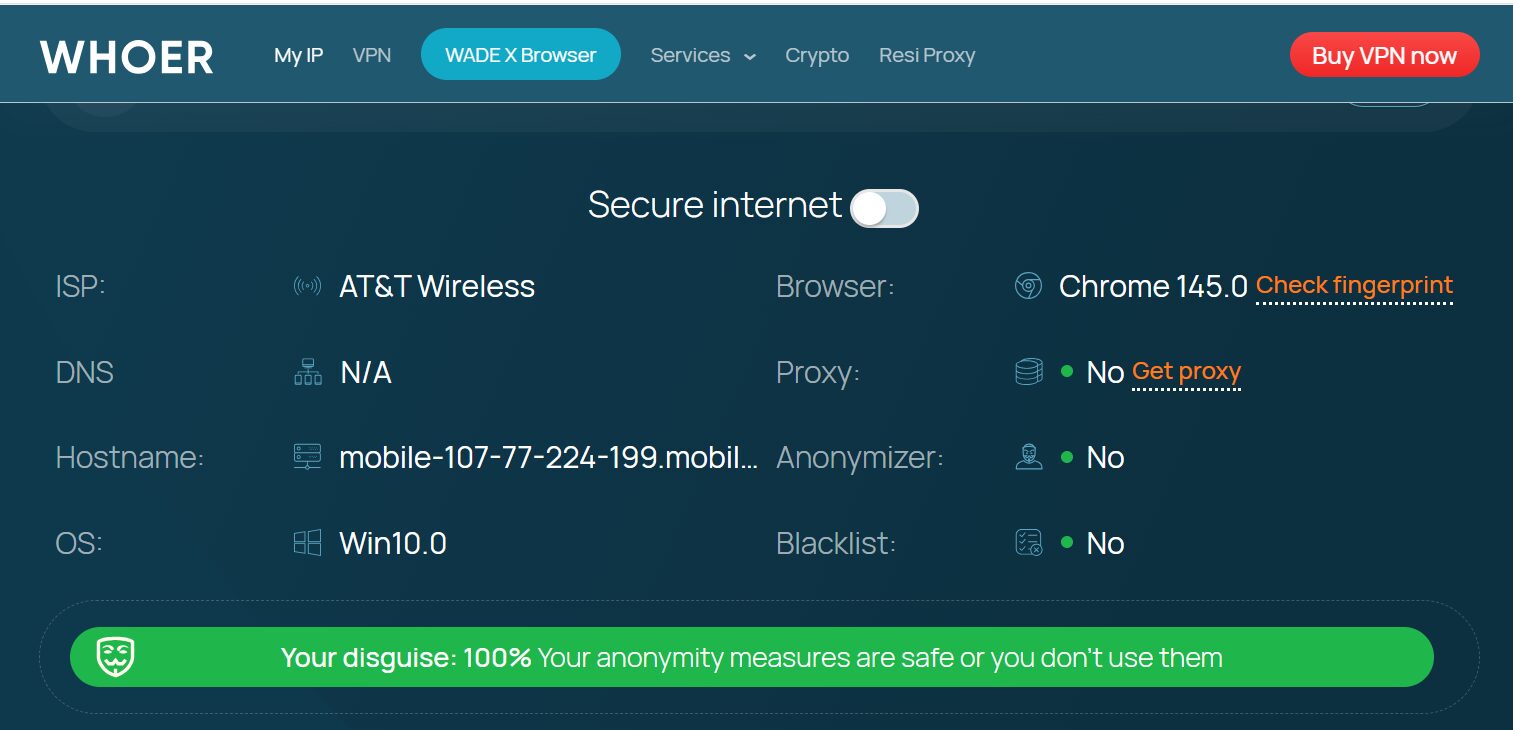
- Anonymity Score: 100%
- Proxy Detection: No
- Anonymizer Detection: No
- Blacklist Status: No
- ISP: AT&T Wireless
- DNS: United States location
The mobile proxy had a 100% anonymity score and wasn’t flagged as a proxy. Whoer.net correctly identified it as coming from AT&T Wireless and US DNS resolution, and no blacklist warnings.
Scamalytics Results:
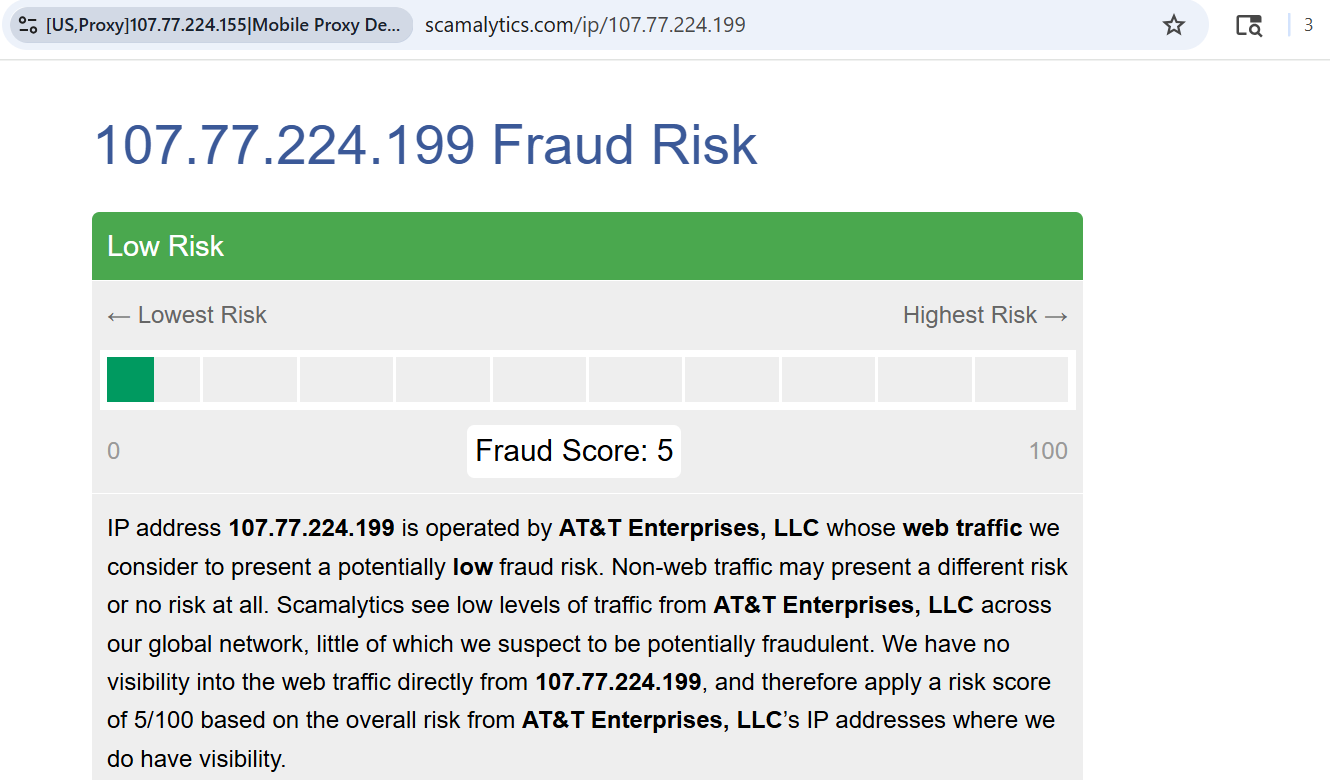
- Fraud Score: 5/100 (Low Risk)
- Risk Level: Low (green zone)
- ISP: AT&T Enterprises, LLC
Scamalytics gave this IP a fraud score of just 5 out of 100 (the lowest/best among the three proxy types tested). The platform noted that AT&T Enterprises’ “web traffic we consider to present a potentially low fraud risk” and they “see low levels of traffic from AT&T Enterprises, LLC across our global network, little of which we suspect to be potentially fraudulent.”
A 5/100 fraud score means this IP is virtually indistinguishable from a genuine mobile user. This means you can use it to test apps or create social media platforms on mobile.
Dashboard and User Experience
Proxy-Seller’s intuitive user interface makes it easy to get started. The homepage is straightforward and lists all the proxy services you can buy with a few clicks. I found the sign-up process pretty easy. You can use a username and password combination or your social accounts, such as Google, Apple, or Telegram.
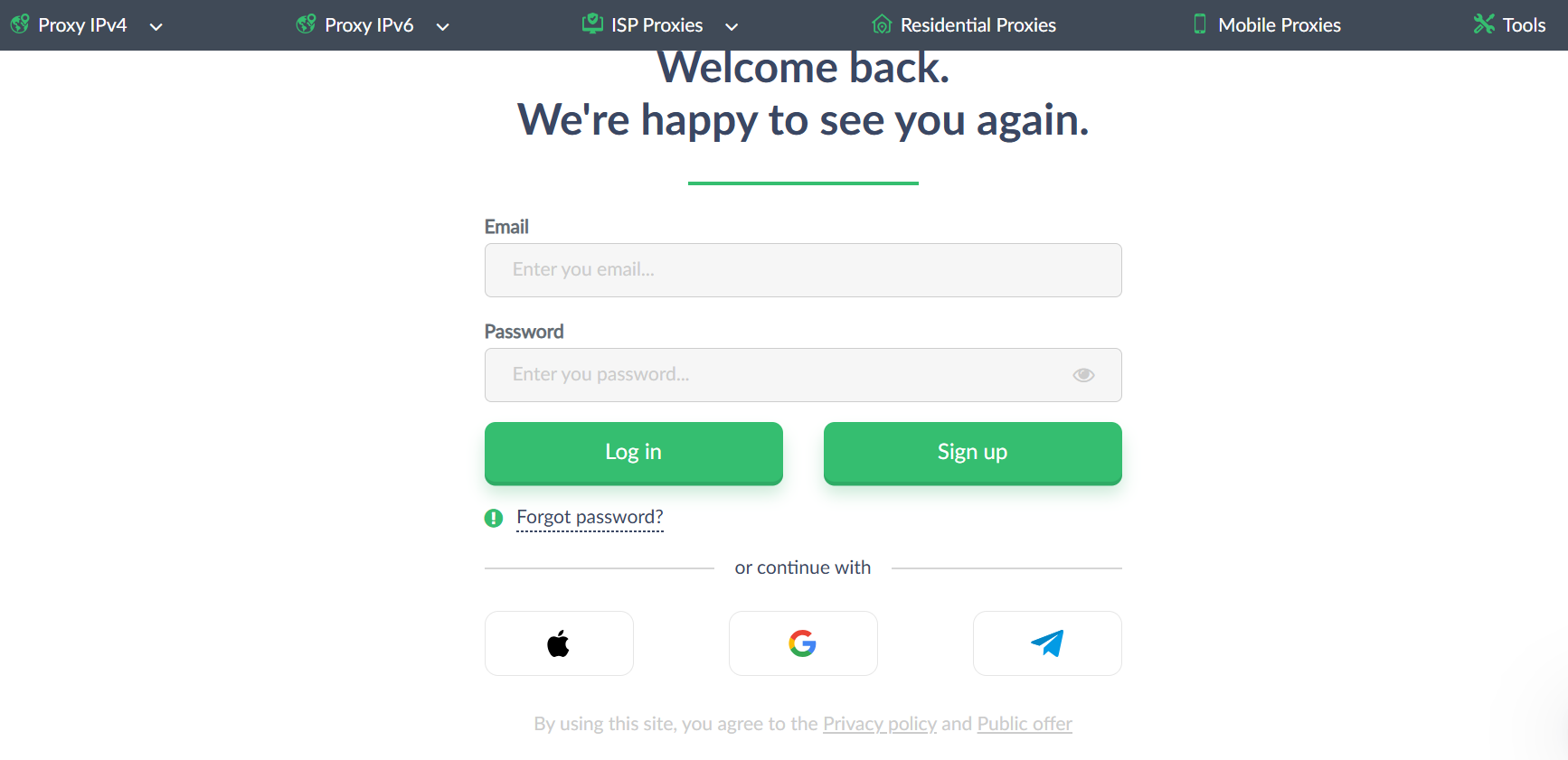
Proxy-Seller has a mandatory KYC procedure for users who want to participate in its affiliate program and earn a commission. The platform also supports two-factor authentication, which you can use with either the FreeOTP or Google Authenticator app.
Lastly, developers can integrate Proxy-Seller’s API into their stack, as it provides well-documented SDKs for languages such as Golang, Python, Java, PHP, and Node.js.
Pricing and Value for Money
Proxy-Seller has different payment structures for different proxy types. For instance, they have a pay-per-GB structure, and monthly plans for residential and a pay-per-IP/port for ISP and mobile proxies.
- Residential proxies: Pay-as-you-go pricing starts at $1.99 for 500 MB, and the largest package is 50 GB, starting at $115. You can also opt for monthly packages starting at $9/month, with 3 GB of bandwidth ($3/GB). Pricing/GB decreases as the bandwidth increases.
- Mobile proxies: Proxy-Seller offers mobile proxies on a per-IP basis. The price depends on the location, with the Czech Republic and Poland being the cheapest at $25/IP. Mobile proxies from Turkey are among the most expensive, starting at $80/IP.
- ISP proxies: These are available on a per-IP basis and grouped into mixes. For instance, the Worldwide 1 mix starts at $1.15/IP, and the Worldwide 2 mix starts at $1.25/IP. Pricing depends on location, with users in regions such as Canada, the USA, and Poland getting ISP proxies from as low as $1.50/IP, while others, such as Turkey and India, get similar proxies starting at $1.75/IP.
Proxy-Seller accepts various payment methods such as PayPal, Mastercard, Visa, Bitcoin, BNB, TRX, USDT, USDC, BUSD, and TON. Most orders are issued automatically, but users can always contact customer support if there are any delays.
A customer can cancel their account and claim a full refund (excluding any fees) within 72 hours in special cases, such as when the proxy purchase is inoperable and they’re unable to replace it, or when Proxy-Seller doesn’t have the necessary IP location.
Best Use Cases for Proxy-Seller
After using and testing Proxy-Seller’s network across various use cases, I found that their infrastructure excels in some scenarios while falling short in others. Based on my testing and the pricing analysis above, here’s where Proxy-Seller actually delivers value versus where you’re better off looking elsewhere.
Web Scraping & Data Extraction
I tested their residential proxies against e-commerce sites, search engines, and public databases. The 220+ GEOs with city/ISP targeting and flexible rotation or sticky sessions are enough to keep scrapers running without constant IP bans. For price monitoring and competitor analysis, where you need high request volumes across multiple geos, Proxy-Seller’s residential proxies will deliver solid performance.
Social Media Management
I ran tests managing multiple Instagram and Facebook accounts using their residential and mobile proxies with sticky sessions. You can use the 7-day session persistence if you want to maintain consistent account fingerprints. I didn’t trigger any security flags during my two-week test period.
Ad Verification and Market Research
To check ad placements and geo-specific content, you can use city-level targeting with residential proxies. The main limitation is that it uses bandwidth-based pricing, which means high-volume ad verification campaigns become expensive quickly compared to competitors with unlimited-bandwidth tiers.
Customer Support
Proxy-Seller has a live chat feature for those seeking help. You can start with the AI chatbot, and if it doesn’t tackle your issue, request to be connected to a live agent. During my tests, I requested to be connected to a live agent and received help within 2 minutes.
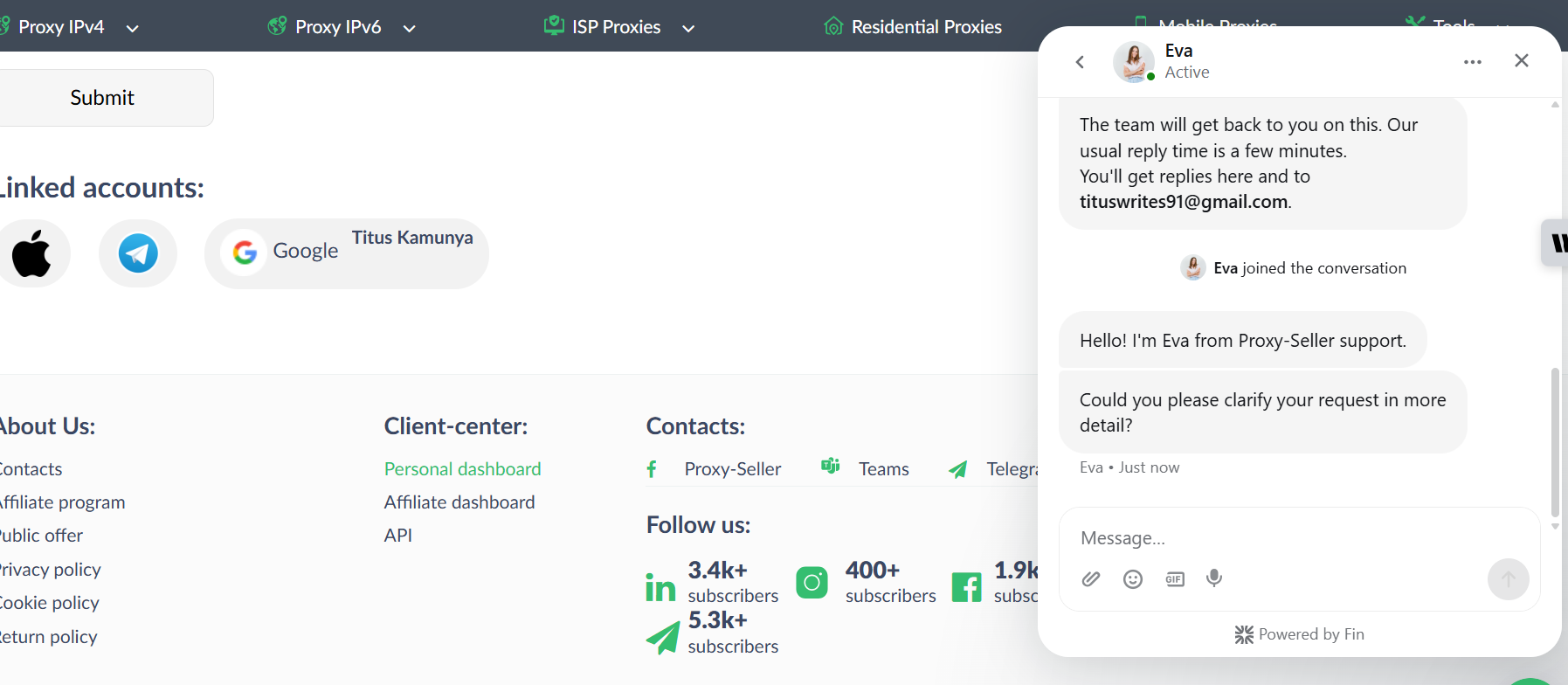
If you opt for self-service, “Roxy”, the AI assistant will help navigate your dashboard and link you to relevant resources to help solve your issues.
Proxy-Seller’s documentation is also easy to use with relevant SDKs to cater to different developer types. It also has a blog section with step-by-step guides for setting up proxies across different browsers and systems.
Lastly, Proxy-Seller has an FAQ section that addresses the most frequently asked questions. From my experience, I didn’t like its structure, and the search button wasn’t very helpful as I typed my queries.
Pros and Cons
During my tests, I found Proxy-Seller to be strong in some areas and also lacking in others. These are my findings:
Pros
- High-quality proxies: All the proxies that I tested passed the anonymity test on https://whoer.net/. This means that systems will treat such proxies as if coming from real IPs.
- A wide range of proxies: You can choose from residential, ISP, mobile, IPv4, and IPv6 proxies from 220+ countries (400 networks and 800 subnets)
- Affordable: Compared to competitors like IPRoyal and Bright Data, Proxy-Sellers IPs are more affordable.
- Easy-to-use dashboard: The landing page has all the shortcuts you need to get started quickly.
Cons
- You may have to sacrifice speed: In all the tests I ran, all proxies were slower than my baseline.
After weeks of testing Proxy-Seller’s residential, ISP, and mobile proxies, I found they deliver solid value for small- to mid-scale operations but also have some limitations.
Final Verdict
Proxy-Seller excels when:
You need budget-friendly ISP proxies for scraping ($0.75-$1.50/IP)
You're managing social media accounts and need clean mobile IPs (5/100 fraud score)
You require geographic diversity across 220+ countries
Look elsewhere if:
You're running high-fraud-sensitivity operations (ISP proxies scored 71/100)
Are Proxy-Seller’s proxies worth it in 2026? Yes, for most users. At $3.50/GB for residential proxies and $1.50/IP for ISP proxies, Proxy-Seller outperforms premium providers such as Bright Data while delivering comparable IP quality.
The residential, ISP, and mobile proxies passed every anonymity test with great scores. Also, fraud detection results for each tested proxy demonstrate that you can use them to avoid platform bans.
However, the ISP proxy’s 71/100 fraud score is concerning if you’re targeting security-conscious platforms, but for standard web scraping and e-commerce automation, it performs impressively.
I would suggest trying Proxy-Seller with their smallest package to test your specific use case.
Frequently Asked Questions
Is Proxy-Seller legit and safe to use?
Yes, Proxy-Seller is a legitimate Cyprus-based proxy provider that has been operating for over 10 years and has 500,000+ customers. The company complies with the GDPR, the CCPA, and ISO/IEC 27001. I tested their service firsthand, and their proxies achieved a perfect 100% anonymity score.
Does Proxy-Seller offer a free trial?
Proxy-Seller doesn’t offer a free trial per se. However, first-time subscribers get discounted rates on their first purchase.
Are their mobile proxies dedicated or shared?
Proxy-Seller offers both dedicated and shared mobile proxies. Dedicated mobile IPs are exclusive to you, while shared pools are used by multiple customers simultaneously. Pricing varies based on whether you choose dedicated or shared access.
What is the difference between Proxy-Seller’s ISP and Residential proxies?
ISP proxies are static IPs from the datacenter infrastructure. Residential proxies are IPs from real household devices. Choose ISP proxies for speed-critical tasks and residential proxies for maximum trust.