


Rotating proxies are the ultimate workaround if you are struggling with IP bans, geo-blocks, or endless CAPTCHAs during your data extraction projects.
A rotating proxy is a specialized server that automatically assigns you a new IP address at set intervals or with every new connection. This constant rotation makes it difficult for target websites to track your activity, block your requests, or restrict your access for businesses and individuals alike.
Beyond simply distributing network load to prevent connection throttling, using the best rotating proxies offers four distinct advantages for web scraping and market research:
- Drastically reduce the risk of IP bans and CAPTCHAs. By rotating through a vast pool of IPs, your automated requests mimic organic human traffic.
- Mask your connection with real residential IPs to keep your identity, location, and scraping operations completely anonymous.
- Route your traffic through specific cities or countries to access region-locked content, localized pricing, and international SERP results.
- Mimic diverse, real-world user behavior to bypass personalized algorithms and extract highly accurate competitor data.
To help you choose the right provider, Geekflare has rigorously tested and ranked the best rotating proxies. Our recommendations are based on real-world testing criteria, including average response time, worldwide location coverage, proxy pool performance, and overall pricing value.
| Product | IP Pool | Locations (countries) | Proxy Manager | Pricing | Rating | Explore |
|---|---|---|---|---|---|---|

Bright Data
|
400M+
|
195+
|
✅
|
PAYG starting at $4/GB
|
|
|

Oxylabs
|
175M+
|
195+
|
✅
|
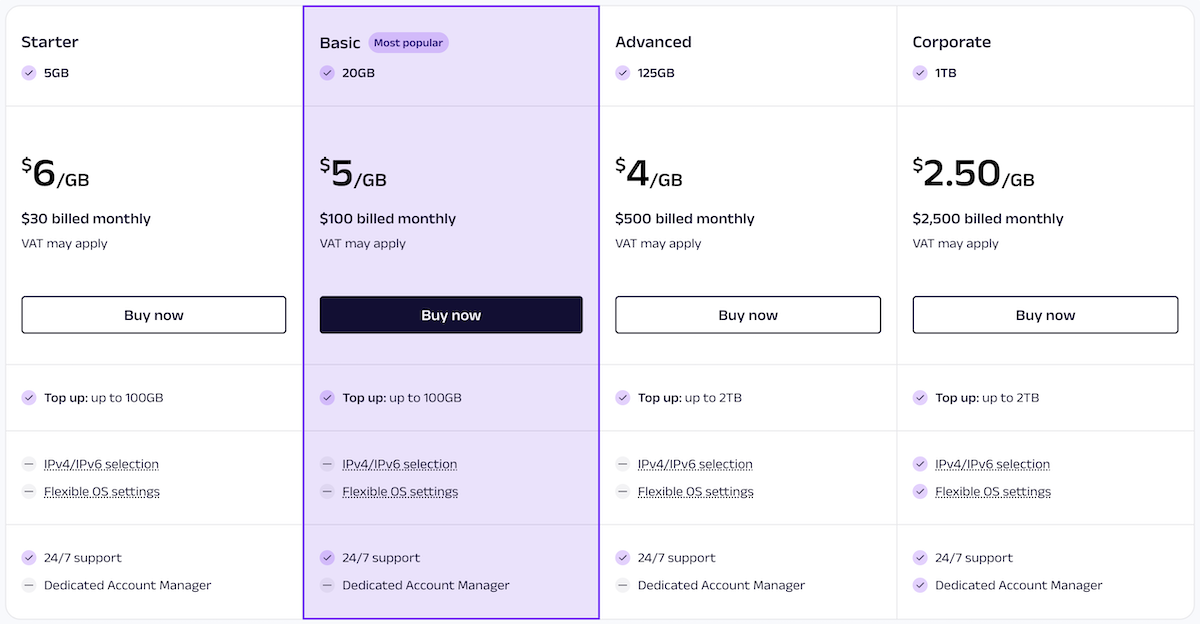
Starts at $6/GB for 5 GB
|
|
|

Decodo
|
115M+
|
195+
|
✅
|
PAYG starting at $4/GB
|
|
|

IPRoyal
|
64M+
|
195+
|
✅
|
PAYG starting at $1.75 for 1 GB
|
|
|

Webshare
|
30M+
|
195+
|
✅
|
PAYG starting at $3.50 for 1 GB
|
|
|

Proxying
|
10M+
|
140+
|
✅
|
PAYG starting at $1.50 for 1 GB
|
|
|

NodeMaven
|
30M+
|
190+
|
✅
|
PAYG starting at $10 for 2 GB
|
|
|

Croxy
|
80M+
|
195+
|
✅
|
Starts at $9/month for 10 GB
|
|
|

Live Proxies
|
Data not Available
|
50+
|
✅
|
Starts at $70/month for 4 GB
|
|
|

Proxyrack
|
5M+
|
140+
|
✅
|
Starts at $49.95/month for US IP
|
|
Disclaimer
Proxies can have legitimate uses, such as protecting privacy or accessing geo-restricted content. However, they can also be misused. We encourage readers to use proxies ethically and responsibly and to research local laws regarding their use. We are not responsible for any consequences arising from the use or misuse of the information provided in this article.
Detailed reviews of rotating proxies
Bright Data
Bright Data is one of the major players in the proxy infrastructure, with an industry-leading pool of over 400 million ethically sourced residential IPs across 195 countries. If you are running enterprise-grade web scraping, ad verification, or competitive market research, Bright Data provides the infrastructure to scale without hitting roadblocks.
I like their commitment to compliance. Through an SDK model, users voluntarily opt-in to share their bandwidth. This ensures IP is 100% ethically sourced and fully compliant with GDPR, CCPA, and major data security standards like ISO 27001 and SOC 2.
Bright Data delivers superior speeds. By leveraging the QUIC protocol (HTTP/3), it achieves an average response time of ~0.7 seconds alongside a guaranteed 99.99% network uptime SLA. You can pinpoint targets by city, state, ZIP code, or ASN without extra cost.
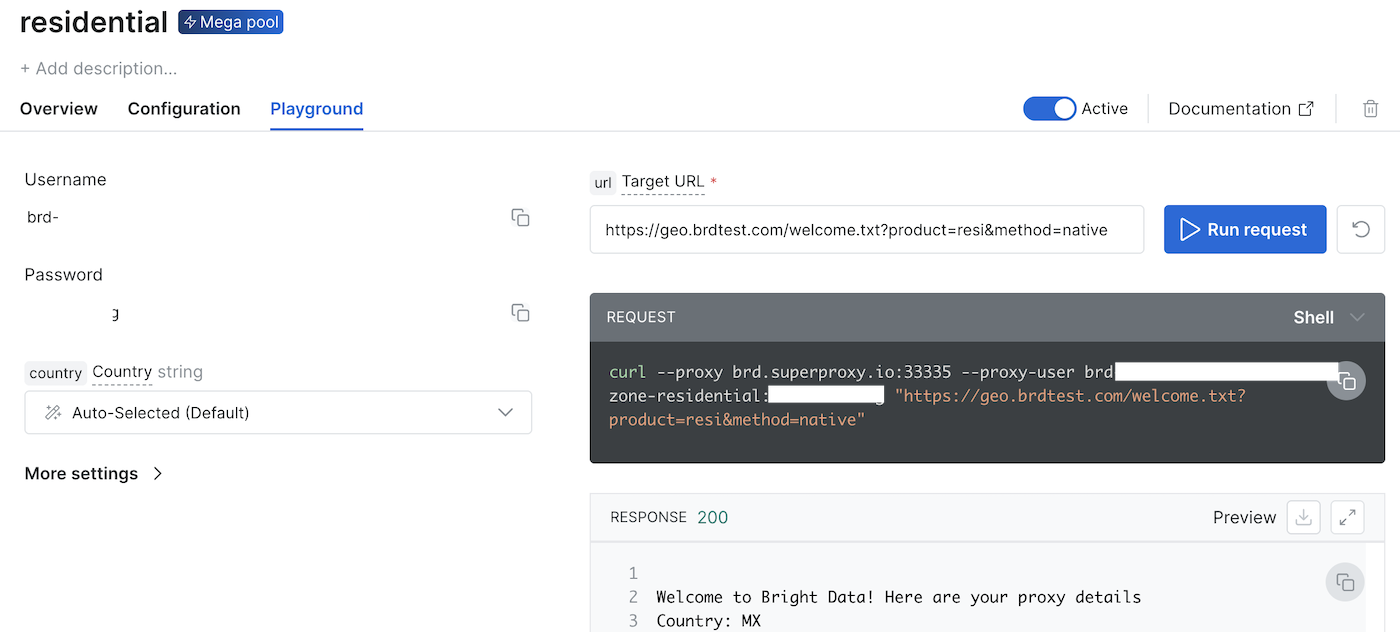
To simplify proxy management, Bright Data provides a Control Panel, an open-source Proxy Manager, a Chrome Extension, and extensive API documentation for integration with automation tools like Puppeteer and Selenium.
Key Features
- Access over 400 million monthly rotating residential IPs spanning 195 countries, featuring free granular targeting down to the ZIP code and ASN level.
- Built on HTTP/3 (QUIC protocol) to deliver fast response times while supporting unlimited concurrent connections.
- Includes automated IP rotation, built-in CAPTCHA solving, and custom session management to prevent scraping interruptions.
- Natively supports Python, Node.js, Java, C#, and Shell, with easy integration into third-party scraping software.
Pros & Cons
PROS
CONS
Bright Data Pricing
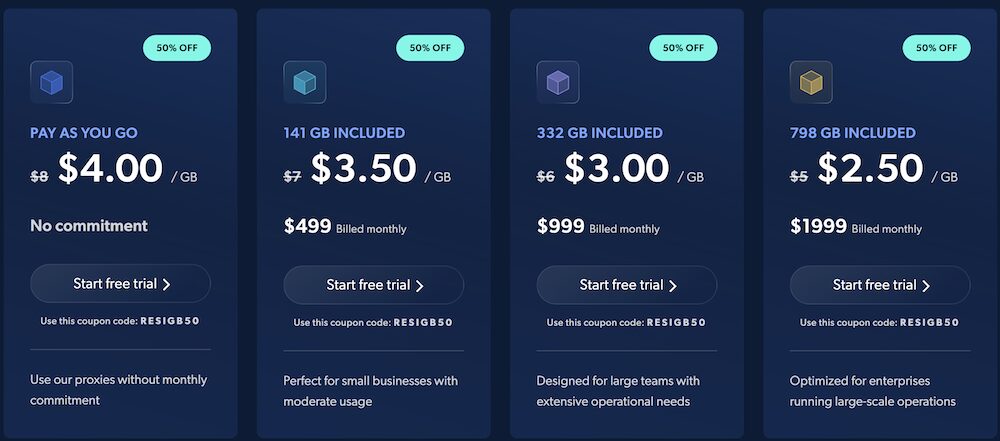
Pay As You Go pricing plan starts at $4/GB, but it becomes cheaper if you commit to higher bandwidth.
Oxylabs
Oxylabs is a premium proxy provider known for its enterprise-grade performance, making it a top choice for large-scale web scraping, ad verification, and cybersecurity operations. With a massive pool of over 175 million residential IPs spread across 195 countries, it provides the solid infrastructure needed to tackle the most demanding data extraction tasks without interruption.
They claim a 0.41s response time, but in the test it took ~0.7s, which is still better. You can bypass blocks and access localized content by geo-targeting down to the continent, country, state, and city levels.
Oxylabs is fully certified under the strict ISO/IEC 27001:2017 standard, ensuring your data operations meet the highest regulatory requirements. It has native support for HTTP, HTTPS, and SOCKS5 protocols. It integrates with popular automation frameworks like Puppeteer, Scrapy, Multilogin and Selenium.
Key Features
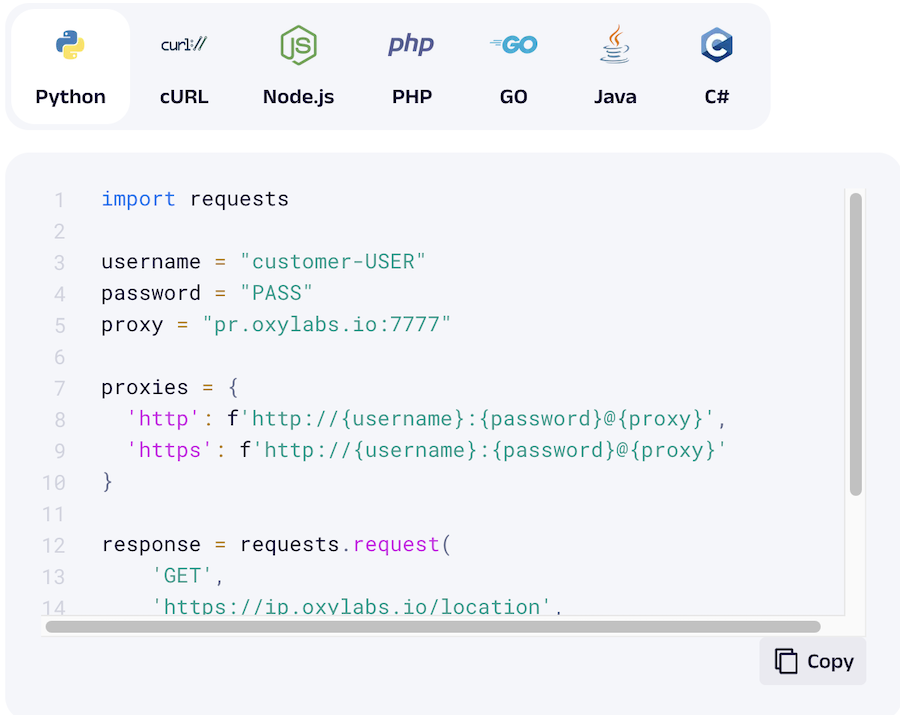
Developers will appreciate the robust public API, comprehensive documentation, and native support for HTTP, HTTPS, and SOCKS5 protocols. Combined with unlimited concurrent sessions, it integrates effortlessly with popular automation frameworks like Puppeteer and Selenium.
Pros & Cons
PROS
CONS
Oxylabs Pricing
Oxylabs residential proxy plan is $6/GB for Starter, which has a 5 GB commitment.
Decodo
Decodo takes a user-first approach to web data extraction, standing out as a premier provider of ethically sourced residential proxies. Recognizing the massive data requirements for AI and Large Language Model (LLM) training, Decodo focuses on providing bias-free access to global public data.
With an expansive pool of over 115 million residential IPs across 195+ locations, it routes requests through household devices to mirror authentic user behavior, bypassing CAPTCHAs and strict anti-bot measures.
I like their dashboard; it was easy to subscribe and find the proxy details info. You can use their browser extensions or integrate with third-party libraries and tools.
Decodo is cost-effective for tasks like global ad verification, price aggregation, and real-time SEO monitoring.
Key Features
Pros & Cons
PROS
CONS
Decodo Pricing
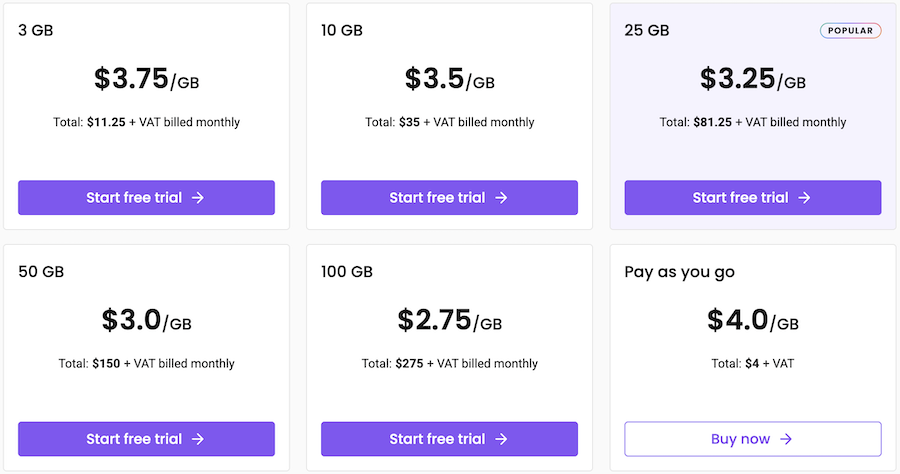
Decodo residential proxy is similar to Bright Data. Pay as you go is at $4/GB.
IPRoyal
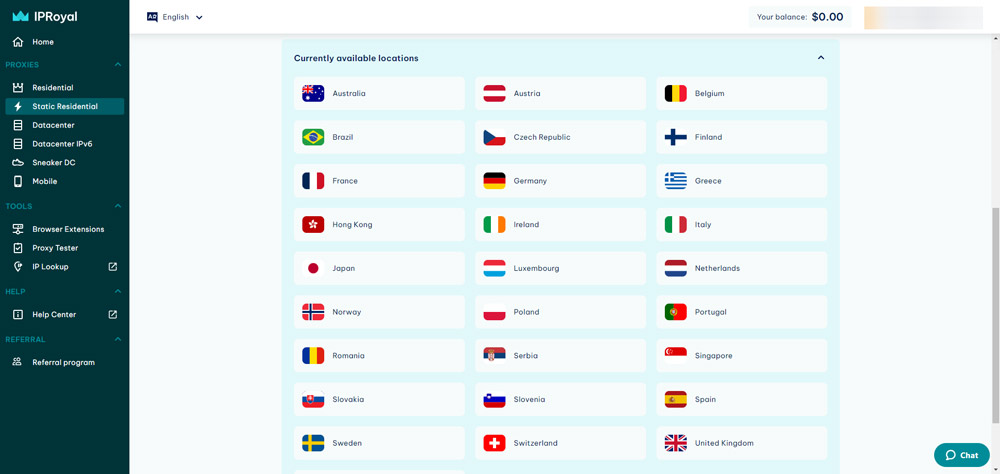
IPRoyal has residential proxies with locations in 195 countries with the flexibility to suit multiple user bases like developers, individual users, and businesses.
Their residential proxies have never-expired traffic, so users are not pressured to meet a usage deadline. It promotes self-service through detailed usage insights and manual or automatic top-ups.
IPRoyal’s residential proxy lets users avoid IP bans, minimize CAPTCHA challenges, and access geo-restricted content. The user gets an intuitive dashboard, browser extension, and traffic control; however, for residential proxies, I found the dashboard data limited.
Besides these, city/state targeting and API access capabilities make IPRoyal ideal for businesses and developers, specifically in account creation, web scraping, and other related activities.
Refer to our IPRoyal review for more information.
Key Features
Pros & Cons
PROS
CONS
IPRoyal Pricing
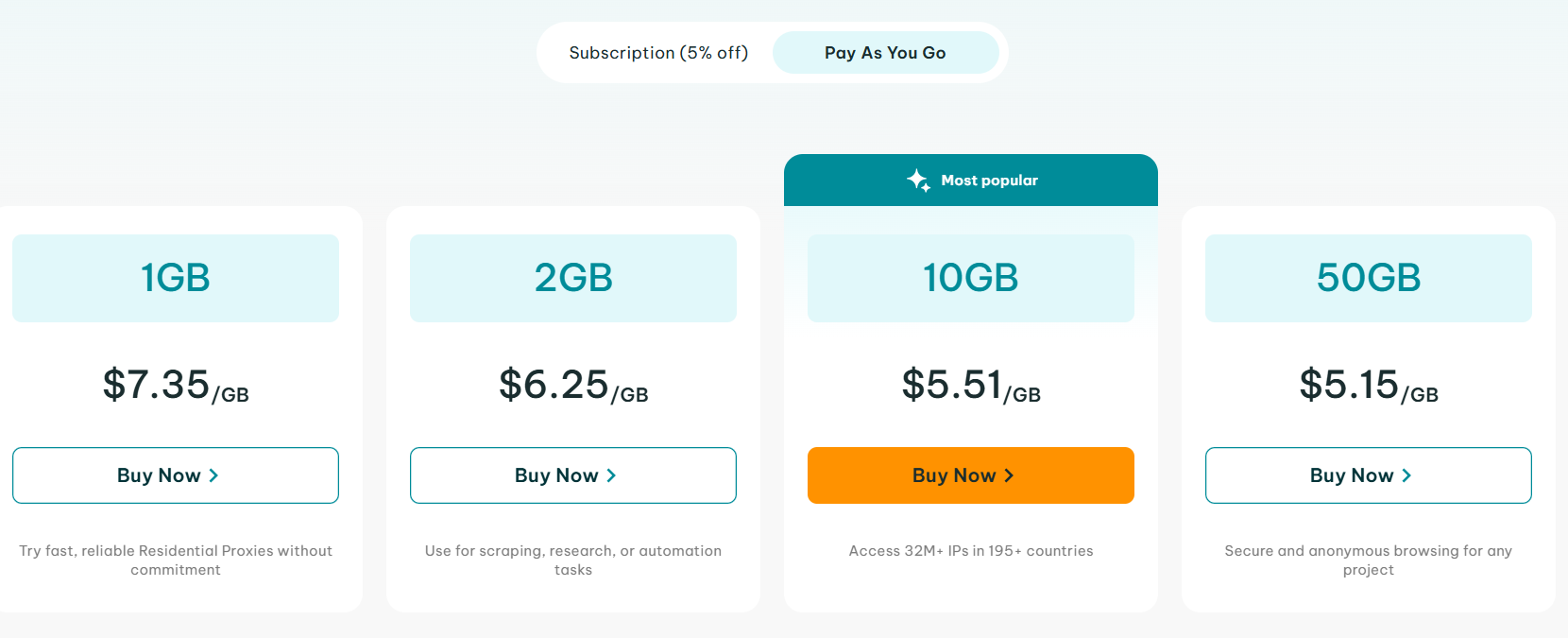
IPRoyal offers a pay-as-you-go pricing starting at $1.75 for 1 GB of data. If you choose subscription-based pricing, there is a 5% discount.
Webshare
Webshare has an ethically sourced residential proxy pool of 30M+ in 195+ global locations with a stable uptime of 99.7%.
Webshare’s residential proxies help mimic organic user behavior, making them most suited to block-free scraping, as they easily bypass IP blocks and CAPTCHAs. This is particularly helpful to users performing web scraping and SEO analysis.
Webshare has its own in-built proxy server extension for Chrome so that users do not need to integrate with a third-party extension. Apart from this, it provides 10 free proxies upon signing up, with no credit card details required.
The dashboard clearly provides usage details and analytics.
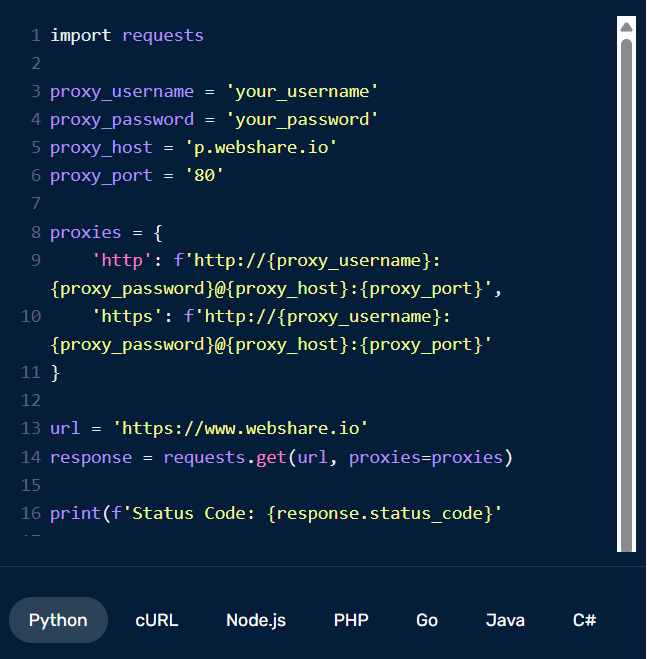
The Webshare API lets developers easily integrate the proxy functionality into their applications.
Key Features
Pros & Cons
PROS
CONS
Webshare Pricing
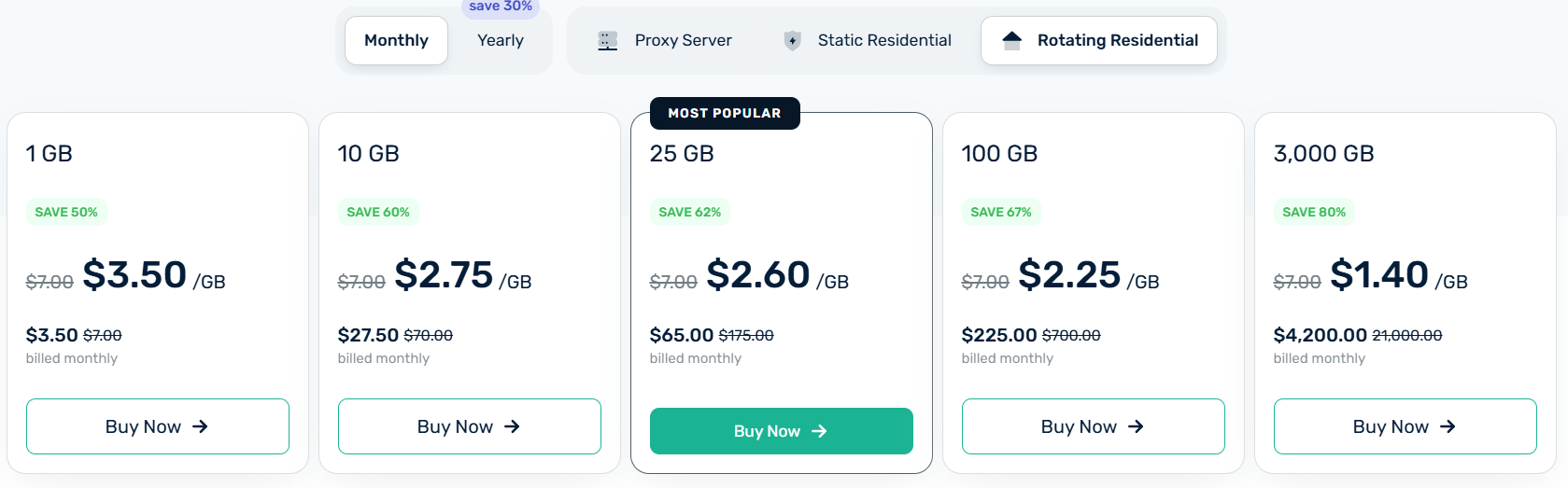
Webshare’s rotating residential proxy pricing starts at $3.50 for 1 GB/month. If you choose the annual plan, the price falls to $2.75 for 1 GB/month. The detailed pricing is given below.
Proxying
Proxying provides access to 10M+ residential IPs across 140+ countries, maintaining a 99%+ success rate. Their infrastructure is optimized for speed, delivering sub-1-second response times.
Proxying offers proprietary extensions for Chrome and Firefox to handle IP switching directly in the browser.
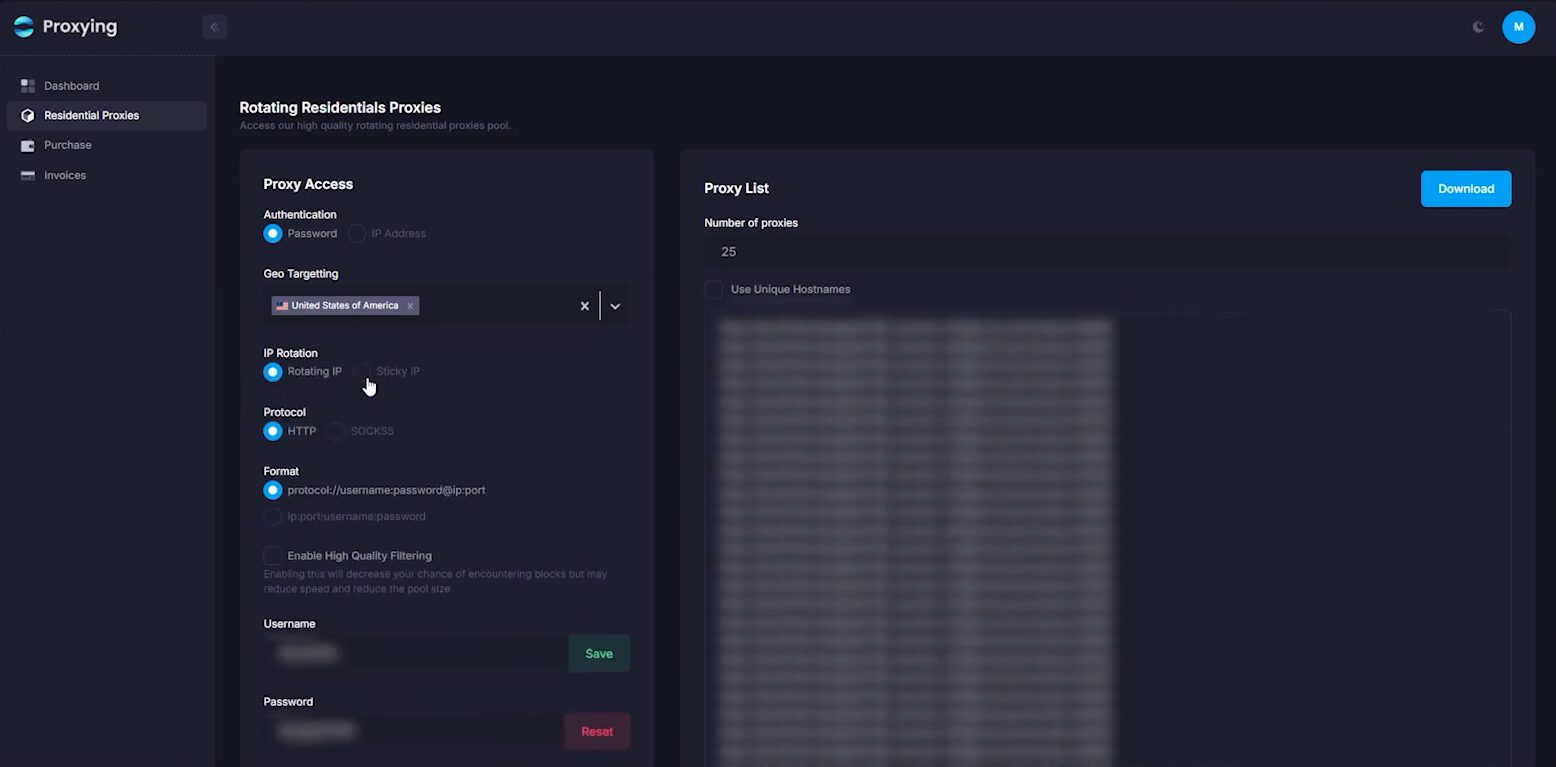
The dashboard displays real-time analytics, specifically tracking data usage, total request counts, and top domain targets. For developers, the platform provides an endpoint generator and documentation for integration with Python, Node.js, and PHP.
Key Features
Pros & Cons
PROS
CONS
Proxying Pricing
Proxying uses a pay-as-you-go model starting at $1.50/GB. Bulk discounts are available. Custom plans are available for usage exceeding 1 TB per month.
NodeMaven
NodeMaven focuses on pre-filtered residential IPs, using a real-time algorithm to screen out low-reputation or slow addresses. They maintain a pool of 30M+ IPs and claim a 95% clean IP rate, which is intended to reduce CAPTCHAs and failed requests for long sessions in tasks like multi-accounting, e-commerce, and social media management.
A unique technical feature is their support for sticky sessions, which can last up to 24 hours (and in some configurations, up to 7 days). This is significantly longer than the standard 10–60 minute rotation typical of other residential providers.
The platform also includes a unique cashback program where users can turn their used traffic back into reusable proxy credits. Additionally, they offer a quality guarantee that pays out $1 in bonus traffic every time a proxy fails to perform.
Check out our detailed review of NodeMaven.
Key Features
Pros & Cons
PROS
CONS
NodeMaven Pricing
NodeMaven offers a $3.50 one-time trial plan that includes 750 MB of bandwidth. Pay-as-you-go pricing starts at $10 for 2 GB. The monthly plan starts at $8.50 for 2 GB.
Croxy
Croxy offers over 80 million residential IPs across 195+ countries. They maintain high-capacity data operations, with a 99%+ success rate and sub-1-second response times.
Croxy’s unlimited residential proxies provide access to the full 80M+ IP pool without bandwidth caps. It’s best suited for heavy web crawling and data mining projects. They also provide long-acting ISP proxies, which combine residential authenticity with session stability lasting up to 12 hours.
The platform is compatible with major anti-detect browsers and scraping frameworks. It has an intelligent rotation system that automatically switches nodes to maintain high-quality connectivity.
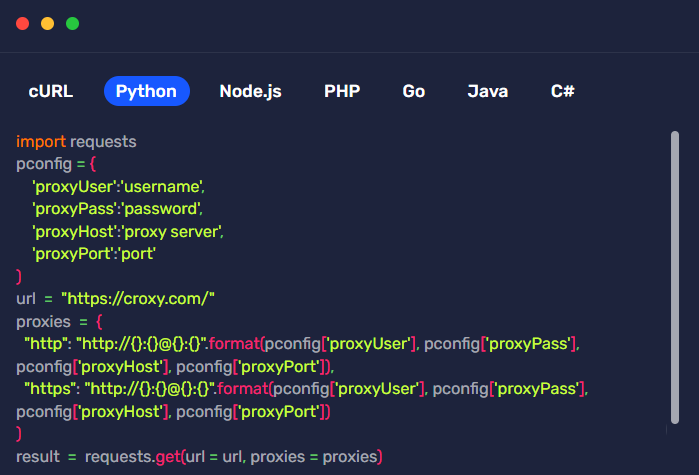
You can easily integrate Croxy into your web scraping project.
A 24/7 human support team is available via the dashboard.
Key Features
Pros & Cons
PROS
CONS
Croxy Pricing
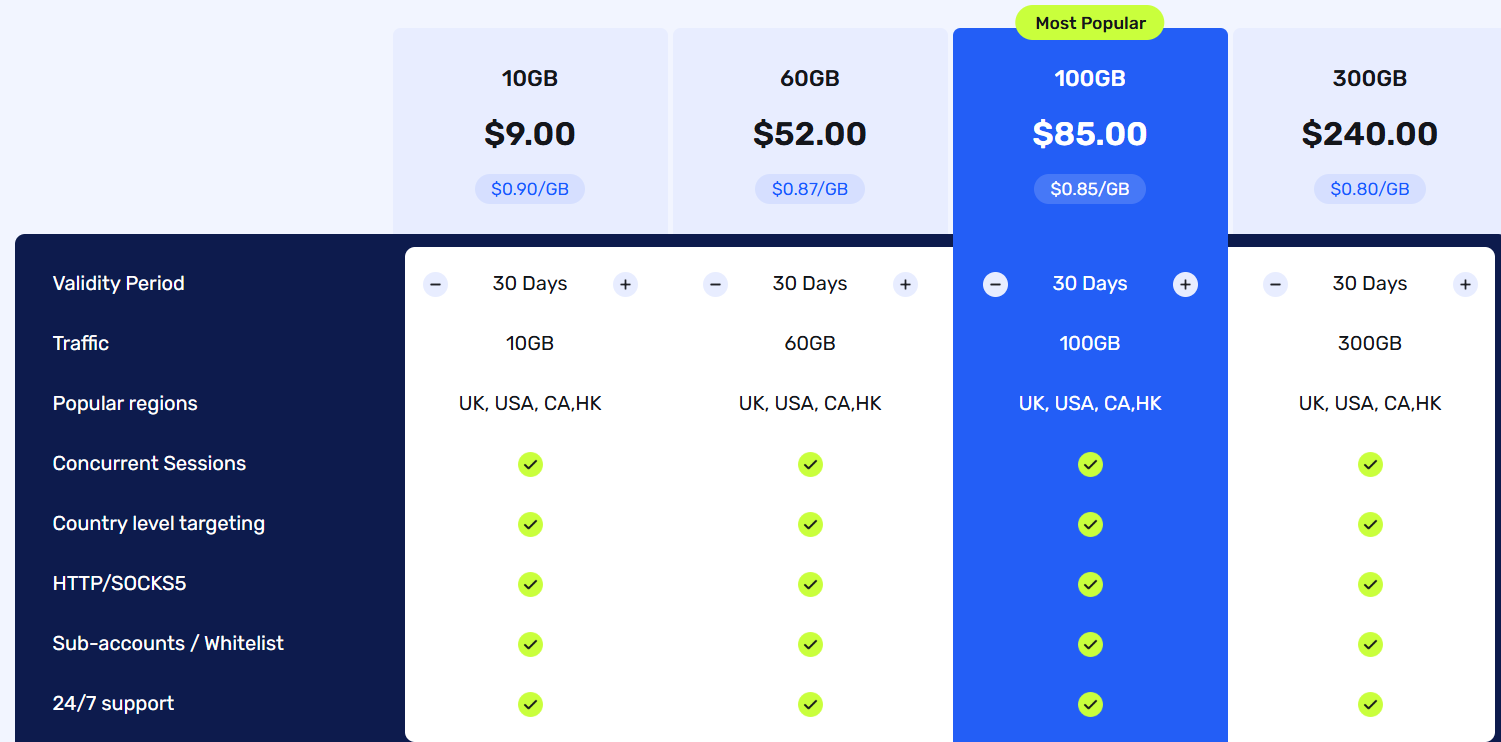
Croxy’s personal plans start at $9/month for 10 GB. Enterprise plans start at $750/month for 1TB.
Live Proxies
Live Proxies manages a residential pool across 50+ countries in the B2B plan with a shared IP pool.
In their B2C plan, they offer up to 500 private IPs per plan. This means the assigned IPs are dedicated to the individual user’s plan during their session rather than being shared across the entire public pool. However, the B2C plan offers only a fixed selection of countries and no API access.
The platform supports both HTTP and SOCKS5 protocols. Users can set IPs to rotate with every request or use sticky sessions for up to 60 minutes.
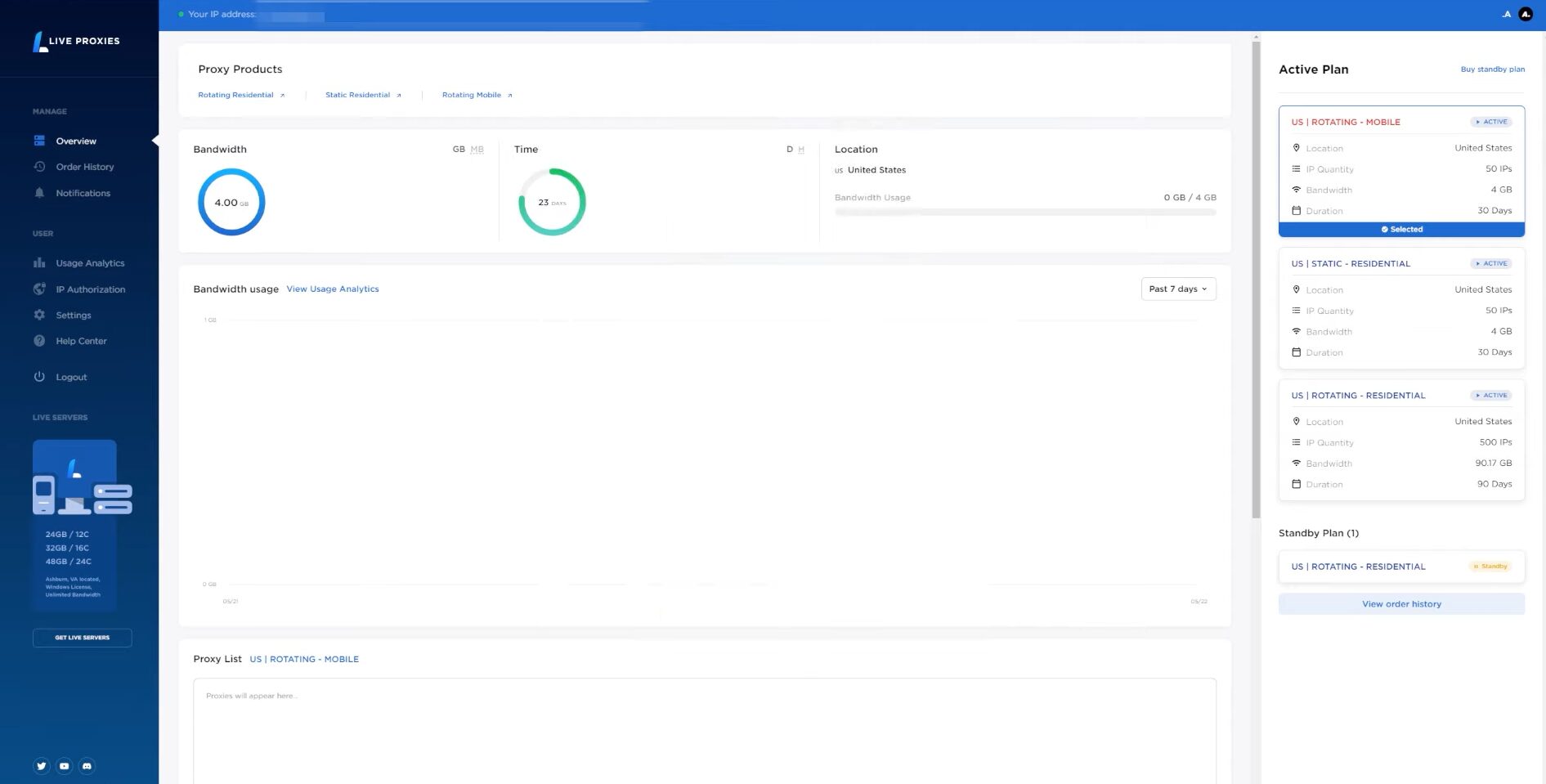
Customer support is primarily managed through a 24/7 live chat and an active Discord community.
Key Features
Pros & Cons
PROS
Discord
CONS
Pricing
LiveProxies operates on a monthly model rather than a simple per-GB price. The pricing starts at $70/month for 4 GB in the metered billing and $130/month in the unmetered option.
Proxyrack
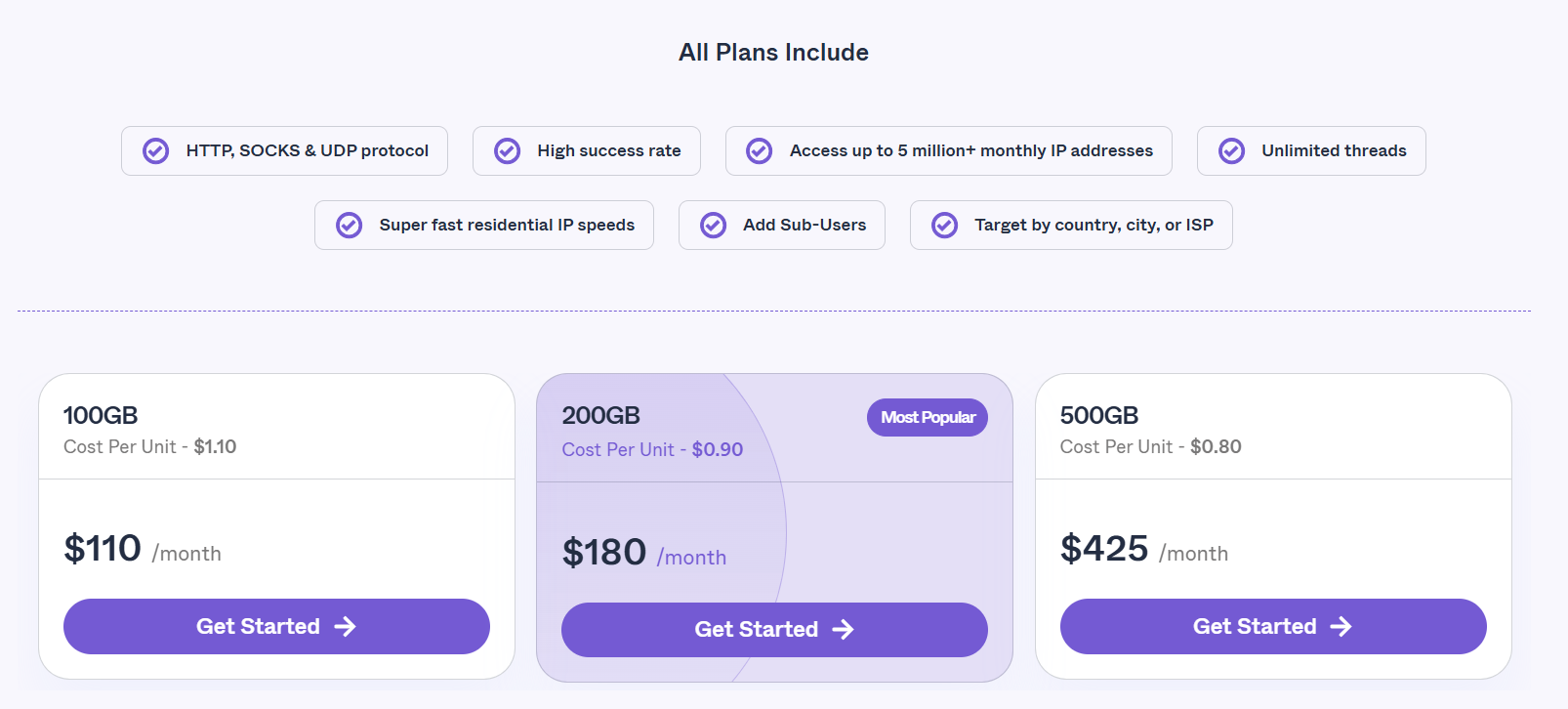
Proxyrack provides access to a pool of over 5 million monthly residential IPs across 140+ countries. The network supports HTTP, SOCKS4, SOCKS5, and UDP protocols, making it compatible with a wide range of scraping and automation tools.
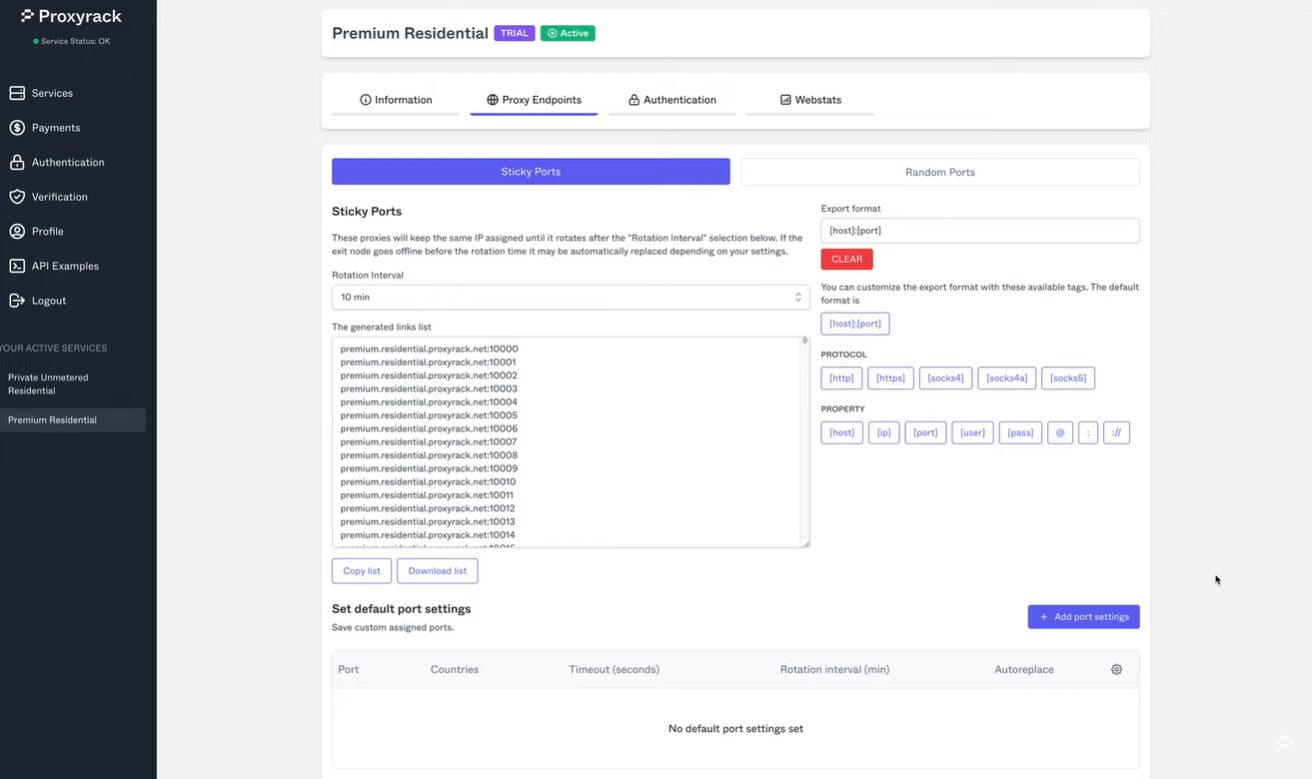
It offers both rotating and sticky sessions, with geo-targeting available at the country, city, and ISP levels. You can execute high-concurrency tasks with unlimited threads on all metered plans. For teams, the platform includes a sub-user management system to isolate traffic and credentials across different projects.
Key Features
Pros & Cons
PROS
CONS
Pricing
Proxyrack pricing starts at $49.95/month for USA IP addresses, with a 3-day money-back guarantee. Premium residential proxy pricing with access to global IP addresses starts at $110/month for 100 GB.
Honorable Mentions
The below proxy platforms didn’t make it to the main list but deserve honorable mentions.

MarsProxies

Proxy

Infatica

SOAX
How Does Rotating Proxy Work?
A rotating proxy works by automatically changing the IP address used for your internet connection at regular intervals or after each request. This helps to hide your real IP address and makes it look like your requests are coming from different locations, enhancing privacy and reducing the chance of being blocked by websites.
Instead of every request coming from the same IP, each request can appear to come from a different IP. Here is a simple flow:
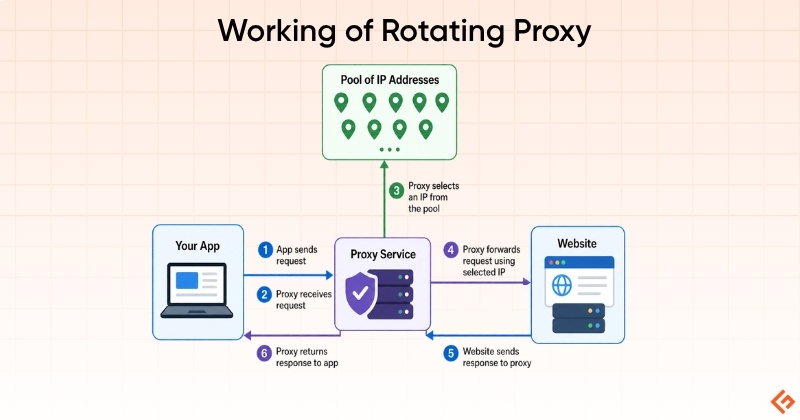
- Your app sends a request asking for a webpage.
- The request goes to the proxy service first. The proxy sits between your app and the target website. Your app does not connect directly to the website.
- The proxy service has access to a pool of IP addresses. For each request, it selects one IP from that pool.
- The website sees the proxy IP, not your real IP. The request looks like it came from the selected proxy IP.
- The website sends the page/data back to the proxy. The proxy then sends it back to your app.
- The next request may use a different IP. This is the “rotating” part. The proxy can change the IP after every request, after a few minutes, or after a session ends.
For general-purpose proxy servers beyond rotation, see our proxy server guide.
Benefits of Using Rotating Proxies
Rotating proxies has 3 benefits, as listed below.
- Enhanced Anonymity: Rotating proxies frequently switch your IP address, making it harder for websites to track your activities. This ensures that your online presence remains anonymous, protecting your privacy and data.
- Reduced Risk of IP Bans: Rotating proxies significantly reduces the risk of IP bans by frequently changing IP addresses. This is especially useful for tasks that involve accessing large amounts of data from the same website, as it prevents detection and blocking.
- Access to Geo-Restricted Content: Rotating proxy providers provide IP addresses from various locations around the world, bypassing geo-restrictions and enabling you to access content that might be restricted in your region, giving you a broader range of information and resources.
Disadvantages of Using Rotating Proxies
There are 3 drawbacks to using rotating proxies.
- Potential for Slower Speeds: Rotating proxies can slow your internet connection. This is because each request goes through different proxy servers, which can add extra steps and cause delays.
- Cost Considerations: Using rotating proxies can be costly. High-quality proxies, especially those needed for large-scale tasks, can be expensive and add up over time.
- Complexity of Setup and Management: Setting up and managing rotating proxies can be complicated. It requires technical know-how to configure the system properly and keep it running smoothly, which can be difficult for non-technical users.
How to Choose the Best Rotating Proxies
Here are 6 factors to keep in mind when choosing the best rotating proxies.
- Proxy Pool Size: The IP pool size is crucial when choosing rotating proxies. A larger pool means more IP addresses, reducing the risk of detection and bans. Hence, look for services that offer thousands or even millions of IPs.
- Location Coverage: Ensure the proxy provider has IPs from various countries. This is essential for tasks needing specific locations, like accessing region-locked content or doing local SEO research and many more.
- Authentication Options: The best services offer both IP whitelisting and username/password authentication. Hence, it is important to consider them, as they offer secure access to the proxies and fit different user needs.
- Rotation Settings: Rotation settings decide how often IPs are changed. Choose a service that lets you customize these settings based on your needs. Whether you need IPs to rotate with every request or at specific times, having control over this can enhance your tasks.
- Pricing Structure: Consider the pricing structure of the proxy service. Look for clear pricing details. Some providers offer pay-as-you-go plans, while others have monthly subscriptions. Choose one that fits your budget and usage.
- Additional Features: Some services offer extras like API access, browser extensions, or advanced filtering options. These can add value and make managing your proxies easier.
Types of Rotating Proxies
There are 3 types of rotating proxies.
- Residential Proxies: Residential proxies use IP addresses assigned by Internet Service Providers (ISPs) to homeowners. These proxies are highly trusted because they appear as regular user IPs, making them harder to detect and block. The main advantages of residential proxies are their high trust level and the fact that they are less likely to be flagged or blocked. They are commonly used for web scraping, managing multiple accounts, and bypassing geo-restrictions.
- Datacenter Proxies: Datacenter proxies come from data centers rather than ISPs. They are faster and cheaper but can be more easily detected as they are not linked to real users. The primary benefits of data center proxies are their high speed and cost-effectiveness. They are typically used for high-volume web scraping, automated tasks, and bulk data collection.
- Mobile Proxies: Mobile proxies use IP addresses assigned by mobile carriers. They are particularly useful for tasks requiring mobile data and are very reliable because mobile IPs change frequently. The main advantages of mobile proxies are their high reliability and frequent IP rotation. They are often used for social media automation, app testing, and accessing mobile-only content.
Final Words
Choosing the best rotating proxy depends largely on your data extraction scale, budget, and specific technical needs like session control or location coverage.
For enterprise-scale performance and massive IP pools, industry leaders like Bright Data and Oxylabs
remain the most reliable choices. For cost-effective or task-specific needs, Decodo and IPRoyal provide excellent flexibility without long-term commitments.
All of the providers above require you to integrate proxy rotation into your own scraper. If you’d rather skip that step, Geekflare’s Web Scraping API rotates proxies automatically on every request, so rotation, CAPTCHA solving, and JavaScript rendering are handled for you.