



Most email marketing platforms cap their free plan around 2,000 to 2,500 contacts, and once you cross that line, the bill climbs fast.
A list of 50,000 subscribers on a typical hosted platform can run $150 to $300 a month. The same list on self-hosted software usually costs the price of a small VPS, somewhere around $10 to $40 a month, plus whatever you paid for the software license.
But self-hosting means you’re the one responsible for installation, security patches, uptime, and setup. Nobody is going to fix a misconfigured server for you.
Happy with that?
Quick Comparison
| Tool | License model | Free tier | Starting cost | Best for |
|---|---|---|---|---|
| Sendy | One-time license | No | $69 one-time | Lowest cost at any list size |
| MailWizz | Annual or lifetime license | No | $59/year | Agencies reselling as SaaS |
| phpList | Free, open source | Yes | Free | Most established pure open-source option |
| Listmonk | Free, open source | Yes | Free | Developers wanting a modern, fast tool |
| Mautic | Free, open source | Yes | Free | Marketing automation beyond just email |
| SendPortal | Free, open source | Yes | Free | Laravel-based teams wanting a modern UI |
| NuevoMailer | One-time license | No | Custom | Small businesses wanting a simple licensed tool |
| OpenEMM | Free, open source (AGPLv3) | Yes | Free | GDPR-conscious European teams |
| Octeth | Perpetual license | Yes, Community Edition up to 10,000 subscribers | $5,000 one-time | Agencies with real budget wanting full white-label |
What Self-Hosting Actually Involves
Before picking a tool, it’s worth being honest about what self-hosted means in practice, because their claim of saving thousands of dollars only holds up if you can actually run the software.
→ You need a server.
Every tool on this list needs a VPS or cloud instance to run on, typically Linux, with PHP and MySQL. A small VPS from a provider like Cloudways, DigitalOcean, Linode, or Hetzner costs $10 to $40 a month, and that’s the ongoing cost most of these tools don’t advertise upfront.
→ You still need a sending method.
Self-hosted software handles your list, templates, and campaigns, but almost none of them send email directly from your server’s IP; that would tank your deliverability immediately. Instead, most connect to an external SMTP relay like Amazon SES, SendGrid, or Mailgun, so you’re paying two separate costs:
- Software
- Email sending
→ Security patching is on you.
Several tools on this list are written in PHP or older frameworks, and self-hosted software that isn’t kept updated is a real attack surface. If you’re not comfortable applying updates and monitoring for vulnerabilities, factor in either your time or a managed hosting add-on where one is offered.
→ Deliverability setup isn’t automatic.
You still need to configure SPF, DKIM, and DMARC on your sending domain and warm up a new sending reputation gradually. Self-hosted tools give you the mechanism, not the deliverability expertise.
Sendy
Best for businesses that want the lowest ongoing cost at any list size.
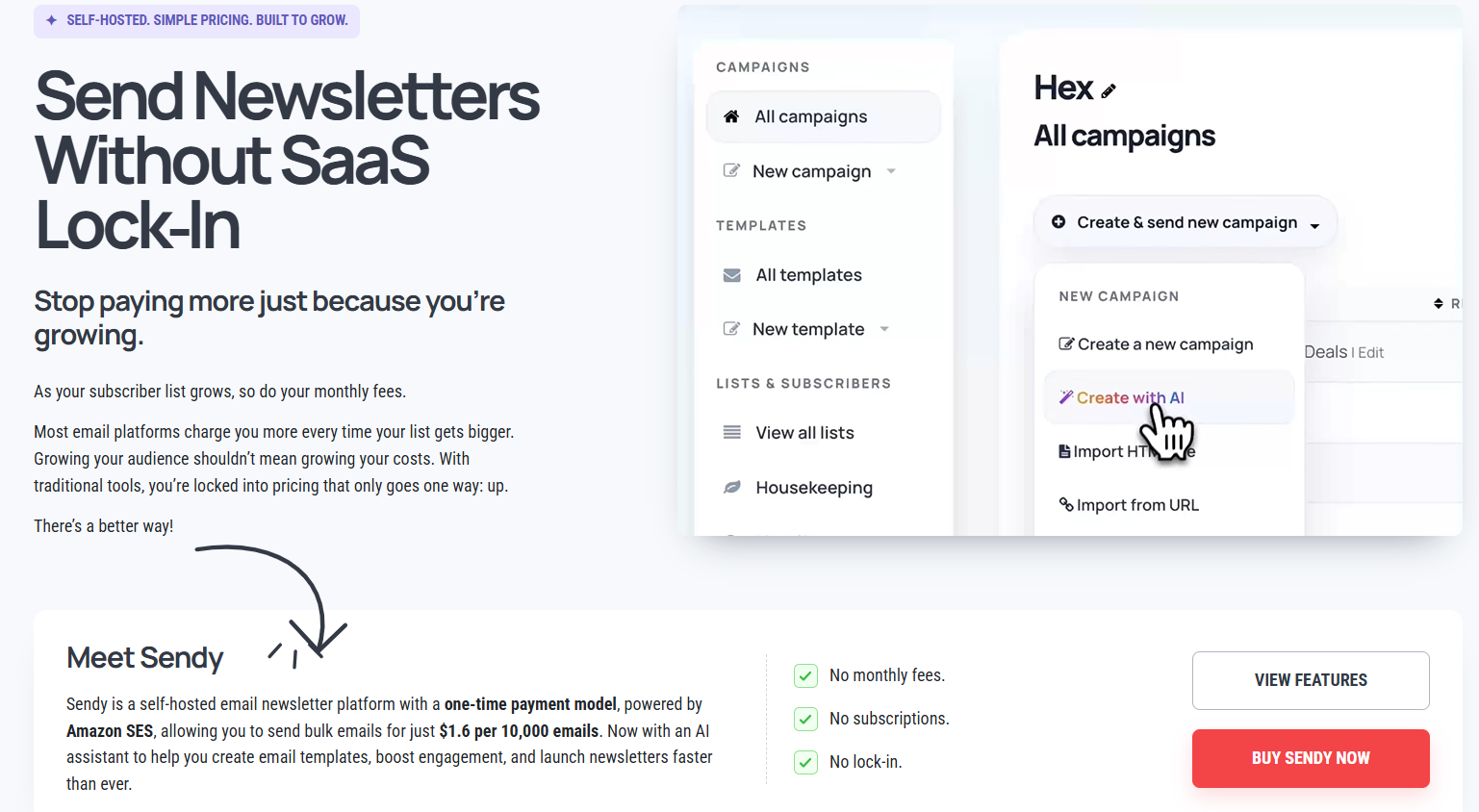
Sendy connects to Amazon SES for email sending and charges a single license fee. It remains the most widely used self-hosted option for lower cost; at current SES rates, sending 10,000 emails costs around $1.60 total.
Sendy now also works with SendGrid, Mailjet and Elastic Email.
Key features
- Drag-and-drop and HTML template editors
- Autoresponders for drip and onboarding sequences
- Multi-brand support from one installation
- Detailed campaign reports covering opens, clicks, bounces, and complaints
- Native WordPress, Zapier, and Magento integrations
Pricing
- $69 as a one-time license fee for a single installation.
- An optional AI writing assistant add-on costs $39.
- An installation service is $79.
Sending costs are separate, paid directly to your SMTP or email API provider.
Pros & Cons
PROS
CONS
Use cases
A newsletter publisher with a 50,000-subscriber list sending twice weekly keeps the total monthly cost under $20, all in.
Our take
If minimizing cost is the priority and you’re comfortable running your server, Sendy is still the most proven option.
MailWizz
Best for agencies that want to resell email marketing as their own branded service.
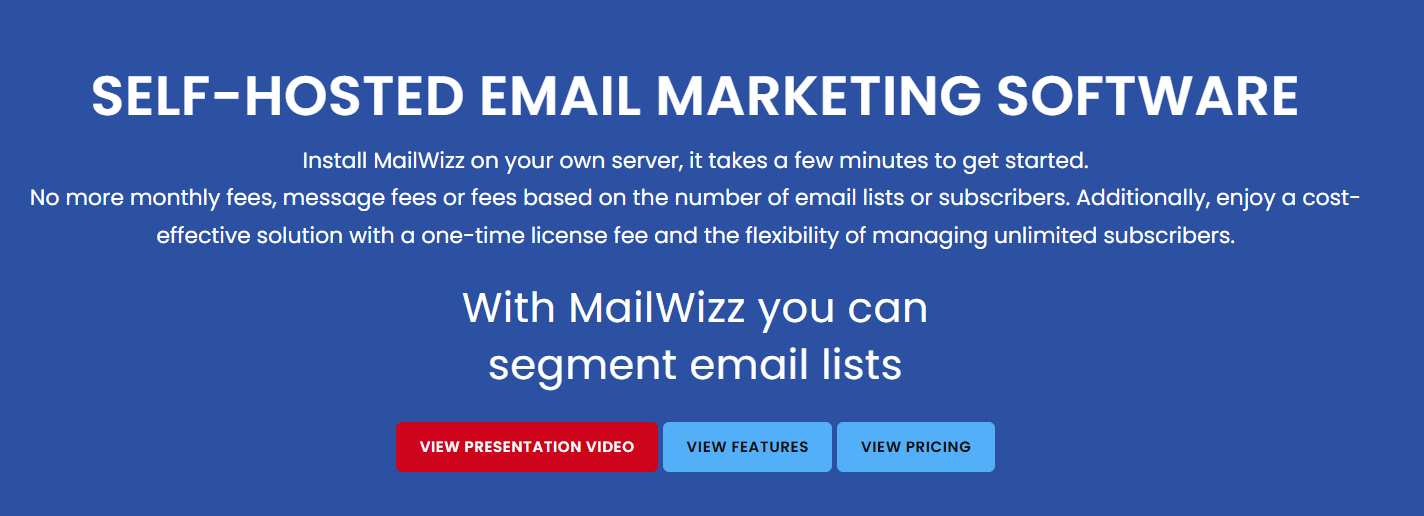
MailWizz has been actively developed since 2013 and is provider-agnostic on sending, meaning you’re not locked into any one SMTP relay. Its extended license specifically supports charging your own customers to use it.
Key features
- Full white-label capability under the extended license
- List segmentation, autoresponders, and follow-up campaigns
- Works with SES, SendGrid, Mailgun, SparkPost, ElasticEmail, or plain SMTP
- Detailed delivery, open, and click reporting per campaign
Pricing
A Regular license costs $59 per year for one license, with multi-license bundles and lifetime options available.
Pros & Cons
PROS
CONS
Use cases
A web agency bundles MailWizz into its hosting packages, charging clients a monthly fee for a branded email tool that costs the agency a single yearly license.
Our take
The Extended license only makes sense if you’re actually planning to resell this as a service.
phpList
Best for teams that want the established open-source option with no license fee at all.
phpList remains one of the most widely deployed open-source newsletter tools, supporting deployments up to millions of recipients. Unlike Sendy or MailWizz, there’s no license fee.

Key features
- Subscriber management with list segmentation
- Campaign composition, scheduling, and bounce handling
- Plugin system for extending core functionality
- API access for programmatic list and campaign management
- Multi-language support
Pros & Cons
PROS
CONS
Use cases
A nonprofit with a modest budget runs its newsletter on phpList installed on a $10-a-month VPS, avoiding both a subscription and a license fee entirely.
Our take
No-strings self-hosted option with a long maintenance track record, phpList is one of the safest picks on this list. It won’t win on visual polish, but it will keep running.
Listmonk
Best for developers who want a modern newsletter and list manager tool.
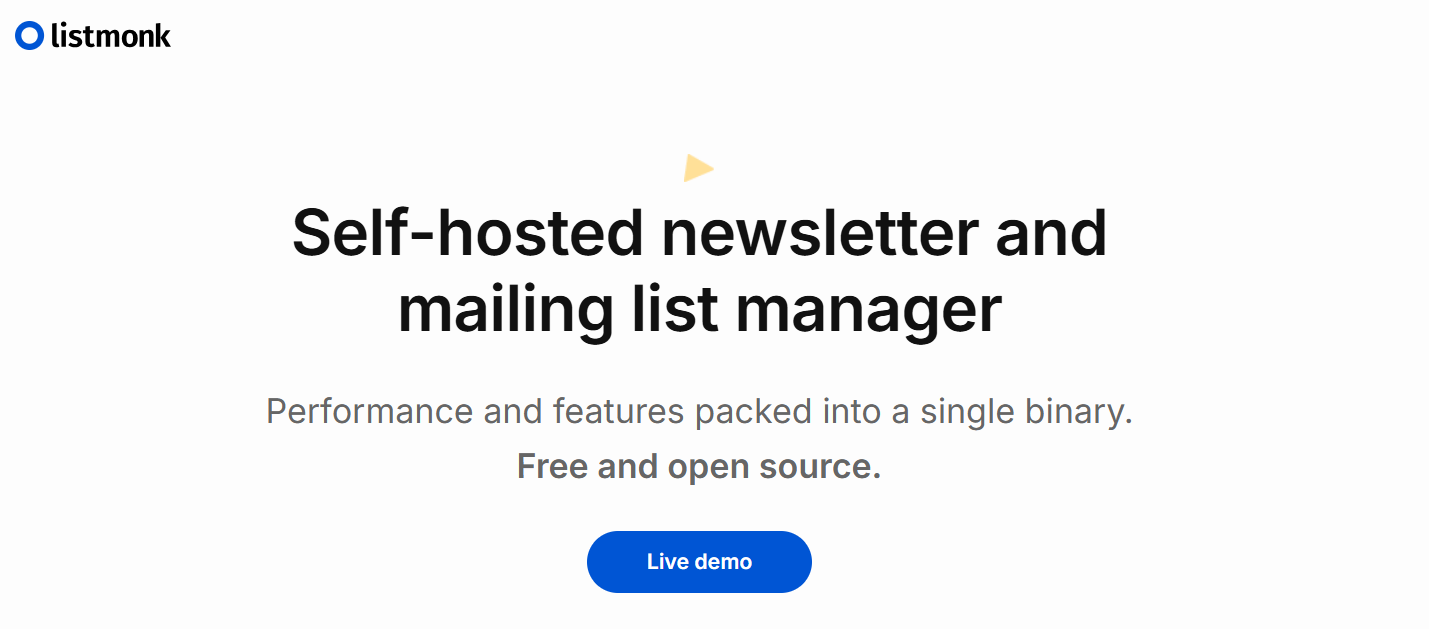
Listmonk is a newer entrant, built in Go with a Postgres backend, and built to be simple to deploy as a single compiled binary. It’s a sharp contrast to the PHP-based tools that dominate the industry, and it shows in both performance and setup simplicity for anyone comfortable with basic server administration.
Key features
- Single binary deployment with Postgres as the only real dependency
- Built-in campaign analytics and subscriber management
- Supports both transactional and bulk campaign sending
- Public API for integrating signups and campaigns into other systems
Pros & Cons
PROS
CONS
Use cases
A technical team already running containerized infrastructure adds Listmonk as one more self-hosted service, avoiding both license costs and the PHP dependency chain.
Our take
If you’re technical or a Go developer and want to avoid both subscription and license fees while running actively developed and genuinely fast, Listmonk is the strongest modern pick on this list.
Mautic
Best for teams that want marketing automation.
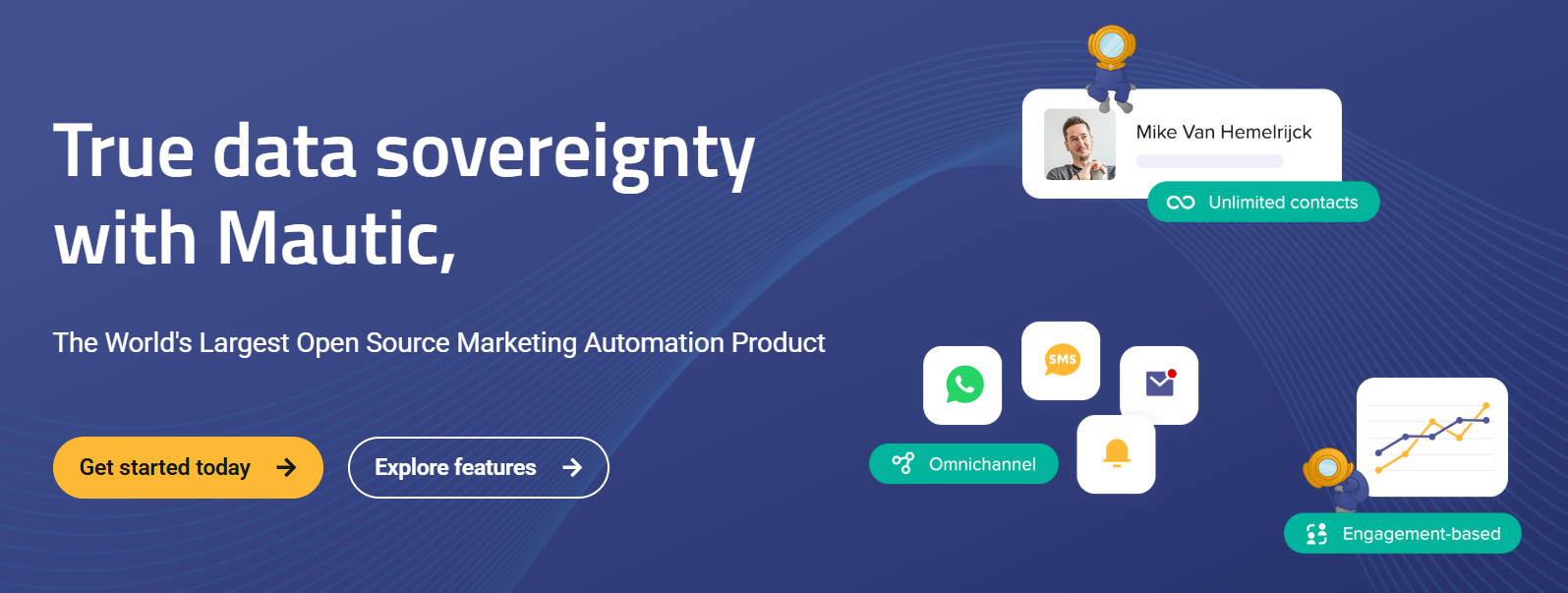
Mautic is an open-source marketing automation product that includes lead scoring, branching campaign logic, dynamic content, and multi-channel touchpoints beyond email. The self-hosted community edition is unrestricted.
Key features
- Visual campaign builder with conditional branching
- Dynamic content based on subscriber behavior
- Native integrations with WordPress, Salesforce, and major CRMs
- Form builder feeding directly into automated sequences
Pricing
The self-hosted edition is free. Managed hosting plan starts from €247.50/mo.
Pros & Cons
PROS
CONS
Use cases
A SaaS company builds an onboarding sequence that branches based on which product features a new signup has actually used, something a plain email tool can’t replicate.
Our take
If you’re building behavior-based automation with email as one channel among several, it’s the strongest open source option.
SendPortal
Best for Laravel-based teams who want a modern self-hosted UI without a license fee.
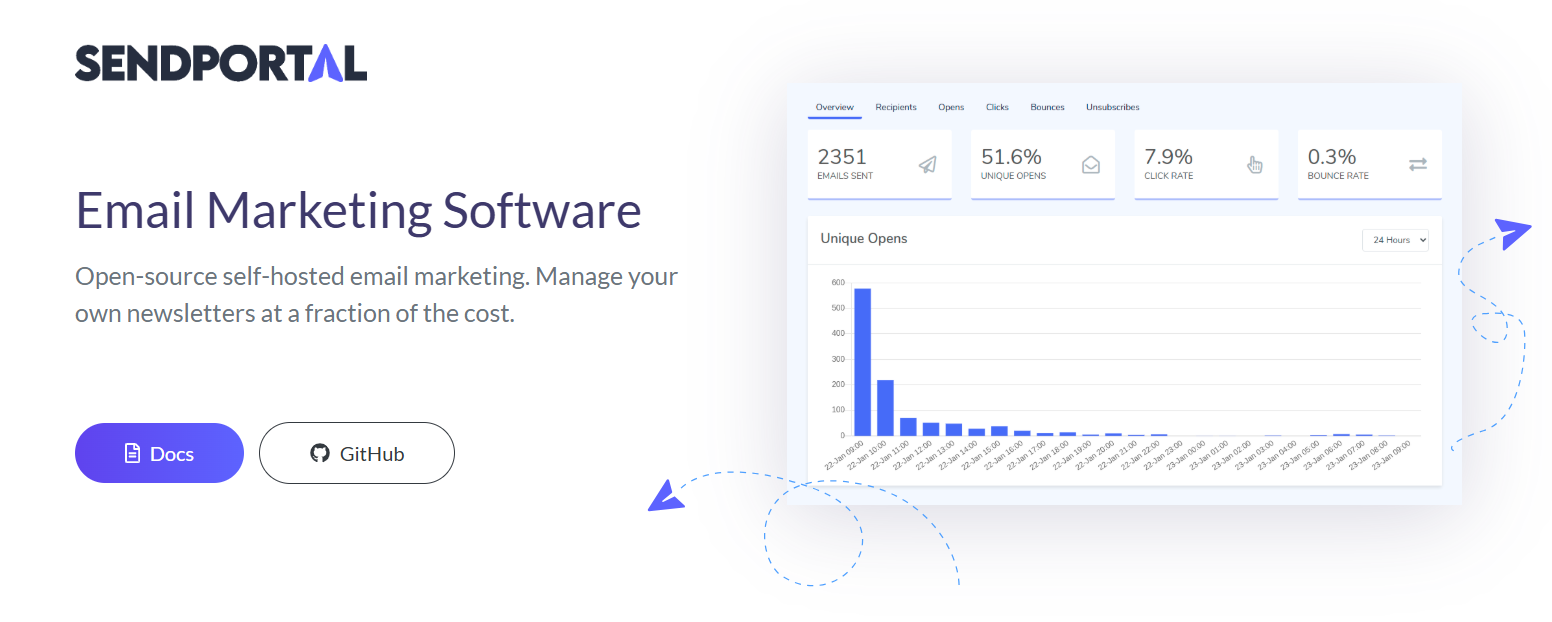
SendPortal is a newer open-source project built on the Laravel framework, aimed at teams that want a modern interface. It supports multiple sending providers and puts no limits on users, subscribers, or messages.
Key features
- Integrates with AWS SES, Postmark, SendGrid, Mailgun, SMTP, and Mailjet
- Multiple workspaces within a single installation
- Built-in test tools to check your email service configuration
- REST API and CSV upload for managing subscriber lists
Pros & Cons
PROS
CONS
Use cases
An agency managing multiple client campaigns can take advantage of the workspace to isolate the brand data.
Our take
For a team comfortable with PHP/Laravel-based software that wants something more current-looking than Sendy or MailWizz, SendPortal is worth evaluating.
NuevoMailer
Best for small businesses that want AI-assisted editing with a one-time-fee tool.
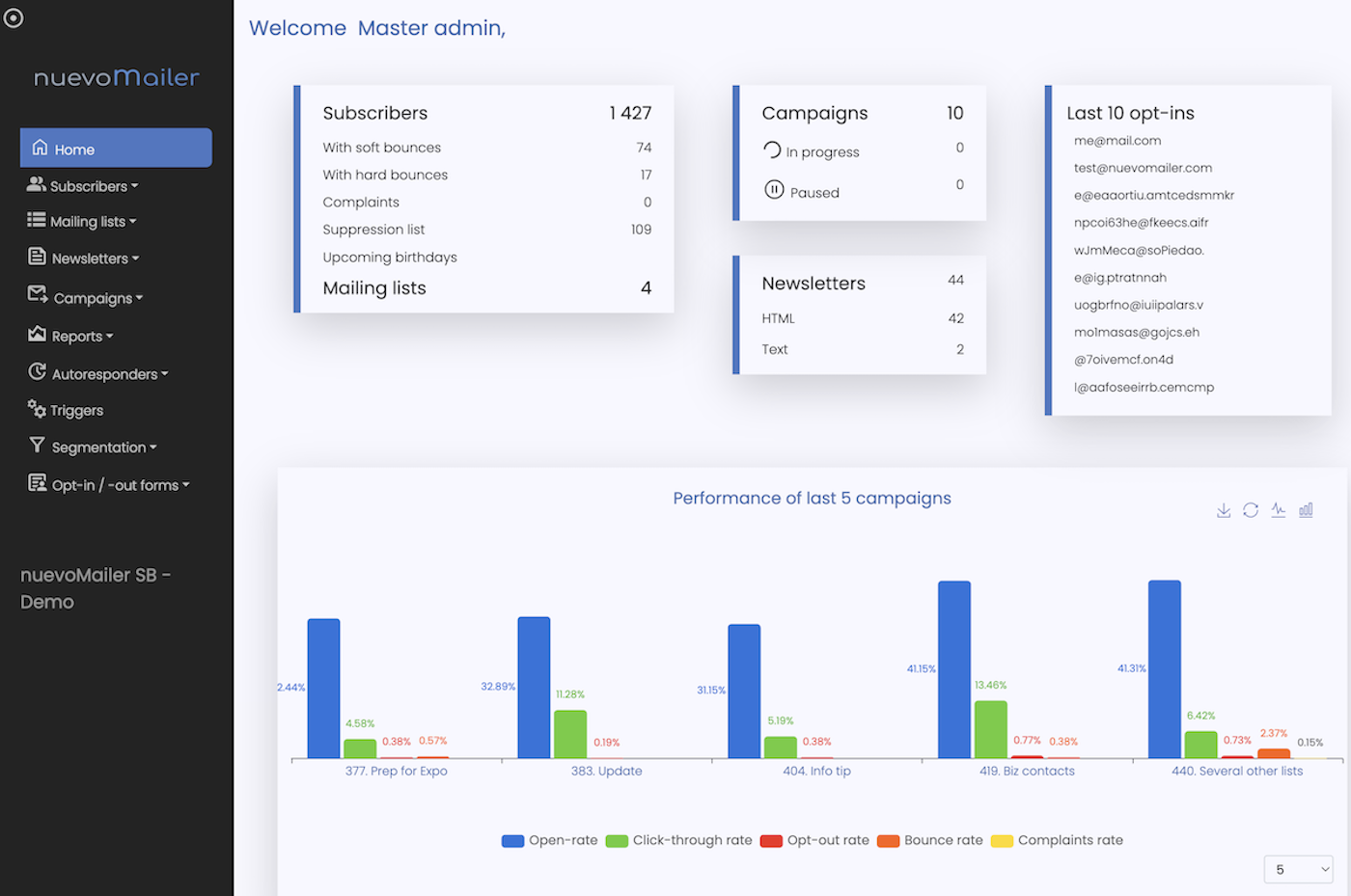
NuevoMailer is suitable for small and medium-sized businesses that want autoresponder functionality, drip campaigns, lead generation, and campaign insights.
You can connect NuevoMailer to Amazon SES, Mailgun, Mandrill, Brevo, Postmark, SendGrid, and Mailjet to send emails. If you use MS Exchange, it works with that too.
Key features
- Unlimited subscribers and mailing lists on the license
- Single and recurring campaigns, drip campaigns, and triggers
- Custom landing pages with real-time tracking and charts
- Automatic removal of inactive or dormant subscribers
Pricing
- Single Business license is $139
- Multi Business license is $699
Note: The pricing is one-time, but free updates and support are included only for 12 months. So, technically, you can use it for longer without paying, but you won’t get new updates until you pay next year.
Pros & Cons
PROS
CONS
Use cases
A small business runs a monthly promotional newsletter without needing the agency-oriented features found in larger platforms.
Octeth
Best for agencies with a budget who want a full white-label platform at enterprise scale.
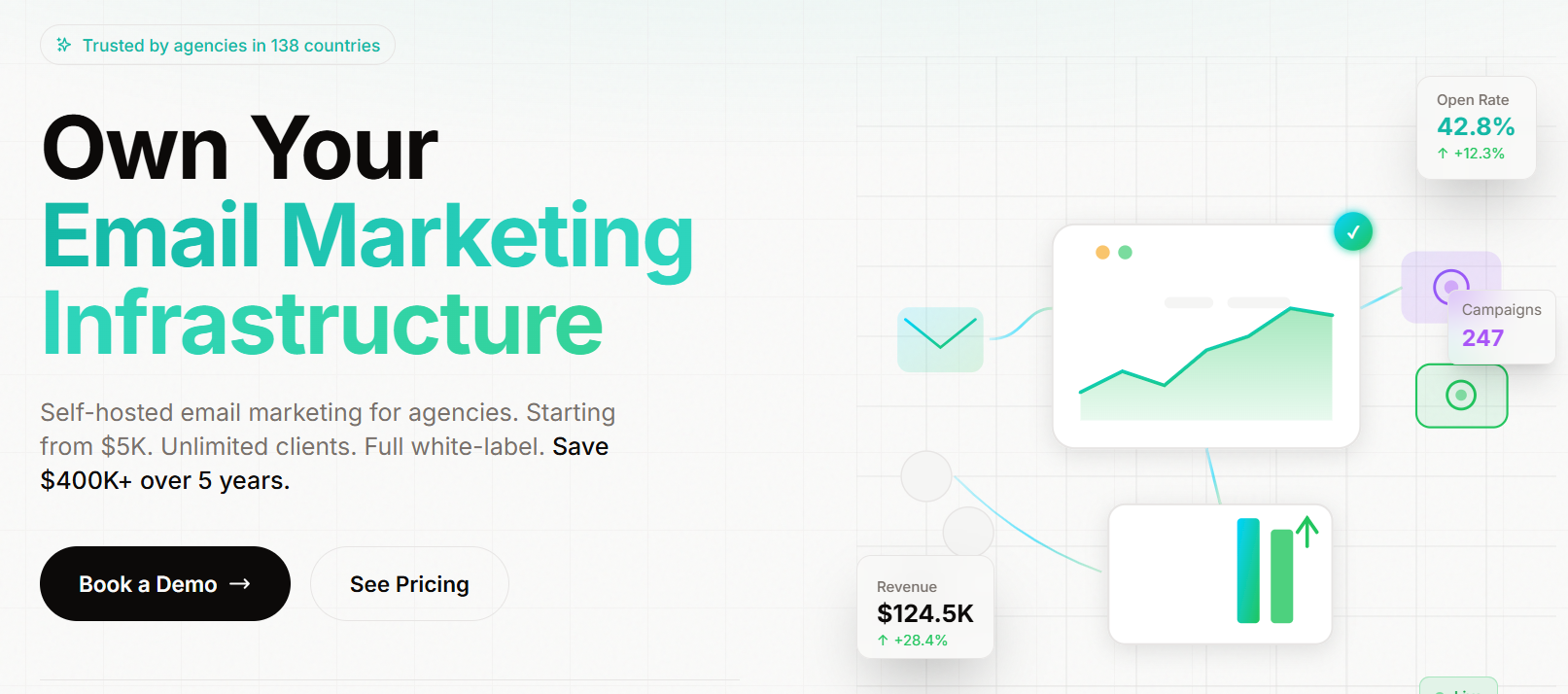
Octeth has repositioned itself since its early launch. Its paid tiers now start at $5,000 as a one-time fee, aimed at agencies managing large client bases.
A free Community Edition exists for testing up to 10,000 subscribers, which is generous compared to most free tiers on this list.
Key features
- Unlimited clients, subscribers, and sends on paid licenses
- Full white-labeling for agencies reselling the platform
- Subscriber activity logging and autoresponder setup
- Built-in form designer and template wizard
Pricing
Paid licenses start at $5,000 as a one-time perpetual license, including 12 months of updates and support. An optional annual service package for continued updates runs $3,000 to $5,000 a year. A free Community Edition covers up to 10,000 subscribers.
Pros & Cons
PROS
CONS
Use cases
An agency currently paying $20,000+ a year across multiple client SaaS subscriptions consolidates onto a single Octeth license to cut recurring costs, according to the vendor’s own positioning.
Our take
This isn’t a fit for individuals. It only makes sense once you’re an agency with real client volume and a budget to match.
How to Choose the Right Tool
If cost is the only factor, phpList, Listmonk, SendPortal, and OpenEMM are free beyond hosting.
If you want a proven option and don’t mind a one-time fee, Sendy remains the default choice most people land on.
If you’re an agency wanting to resell email marketing under your brand, MailWizz fits at a modest license cost, while Octeth fits at a much higher price point once you have real client volume to justify it.
And if your ambitions go beyond email into marketing automation software, Mautic is a nice option.
Whichever you choose, budget for initial setup, domain authentication, and ongoing security patching. The software being free doesn’t mean running it is free.
If you’d rather skip server management, our best email marketing software guide will help you.
Good to know.
Is self-hosted email marketing cheaper than a hosted platform?
Usually yes at meaningful list sizes, but only if you count your time or a sysadmin’s hourly rate as close to zero. Factor in VPS costs, your SMTP provider’s per-email charges, and the time spent on setup and patching before assuming it’s a clear win for a small list.
Do I still need Amazon SES or another SMTP provider if I’m self-hosting?
Yes, self-hosted software manages your lists, templates, and campaigns. You still connect to an external SMTP relay for actual sending.
Can I move from a self-hosted to a hosted platform later?
Yes. Most of these tools let you export your subscriber lists as CSV files, which any hosted platform can import. You’ll lose campaign history in the process, but your list and sending reputation can carry over.
Conclusion
Self-hosting saves money once your list grows past a few thousand contacts, but it shifts server management responsibility onto you. If not ready for that and your list is small, you may be better off with these free email marketing tools.